distributor = chafurnate, 9567227611, kingconix, 9193354047, 9202804671, piannabanana, 8773340460, tf79gg, 7372951758, skinsminkey, 18003594107, 7262167081, superdave112279, tickzel, ezy8140, 3129266906, 8703903171, 7272632096, 8323461895, auldtwork, instanetsol, 2019425209, 8885905962, 8436954265, 18444946060, mez56709146, 389039235, 8885847498, 9842631014, 9107564558, 18003887000, 5204672116, 5137076994, 3372055034, 4805503207, cymboxen, cannacbana, 4234273117, 4696063080, oxelotto, imagefañ, 9733483845, 2165620588, 4142076549, 9452185392, 2705139922, 7242732030, 7203725721, 2027688469, 6099782127, gracesandy08, 5716216254, 16463611389, 8882249645, 8572821800, 9047236300, 18552132382, chaturntae, 6062401130, 8323256456, 6627789116, 7027105520, 9787672641, 6163306246, 8633193801, 6317692145, 8332053164, 7063813435, 18002286855, mstina209, 5088944588, 8178065501, aznhkpm, 2042897313, 9783551609, 7866877020, 3368046099, 8177615469, 8002743932, 6317764262, 8333952329, 8669920307, 4033425c2, 3055062319, 3132933287, ilikeocmix, 8063753039, 6085094890, 4043691986, 9154404953, 7783316933, 18662552529, 2079223193, alitaxangelic, 4842283001, 6153223900, wagershack, 8338701889, 2092553045, wzggstats, 8442066155, 2028167451, 18008300286, mbm66698001, 8324817394, 9155445800, 6105255250, 8438832246, 19057716052, 4049960554, 8554062187, 4162978362, 9123426998, yorestudiomg, 8474268085, baceracted, 3234872622, troshilly, 7135666509, 8338950348, 8442211567, 18666201302, 1800076072, ửodle, 4049394970, 8163078906, mfznⅲ, 4089185125, 6198923514, 4808347546, 3850er3040c, 6102159968, 888.904.8461, globalzone53, 2153099122, 18009132411, 8443580642, 4805465503, 7657404036, 8436121015, 3462730012, 9854250920, 18336840593, wdf48650gsp, 611247392201, 8558562511, 6782015589, 904.207.2696, 8667866682, 6237776430, ezy3377, 18556148530, 8324262067, 5168821708, 6696225537, 5712268380, 9298103988, 9548893729, 4808416993, 4330564191, 2538442114, 4373403232, 9032057164, 2087193274, 8664872643, zawatinao, 18557905018, 8014123119, 7247650023, 9085048193, 6194641731, mypremierchart, ilorultcbs94r8v, 18779773879, 4808475341, 7059801767, lasrs.statres, boecsched, 4808472619, 8594295188, brazedotcom, 8566778008, 18005680344, 8642516223, 2766344760, 8178401646, 8664425030, 8045005635, 5013000112, 6144291561, caffine64, 5043993551, 8665110793, 5164655255, ezy6521, 8602936799, 18336902260, 18333110849, 7167454490, 3604835198, 7145099696, 8888570668, 8174963036, luxuryinteriorsorg, 6143332209, 8332420718, pippypipernpc, 9152554542, 18669516592, 9854414006, 7785895126, 7176786808, 18002228794, 2142831548, bitsylowhigh, 8669360316, recuburate, 4846353028, 5704918262, khanacademyorg, 18004684743, 7158988027, 18664487098, 3392109005, 6036638908, 5735344024, 7175316640, gabbysmol, drmaureenhamilton, 6047363925, meloplaycom, 8557199695, 8448440111, 8669503840, 8443765274, 18774014764, influencersgomewd, 8599631921, 2629487300, joyuicoltd, 4079466142, 2076077881, cherrybella808, 8037663919, 64.277.120.231, syromatch, oxolado, 36000522389, 8322347988, tulkotaks, allredismyteacher, 7203584046, brianchavez85, 18003921147, oplzlepredstavy, 5049497786, ezy2140, 7243139278, 2183167675, 8017375151, 8665301092, 8774315691, 8185875547, 8653815207, 6192467477, 8556833145, 2066918065, r6tradker, 481615428, 80720963038, 2678173729, 18002410172, 18007774001, freyarose77, clearskinstudy, mgp61942301, 5132972028, 18555959055, theflixee, 6313153145, nfl66ir, chsproviderdatavalidation, freakinthesleep, 5133221008, 7023597111, morancaresys, adultowrl, 5089486999, 5034367335, 7628001252, ezy3837, melinnderr13, 4184251145, 5173181159, sp11l87222, 7037770280, 9035930589, 8662284345, 18664188154, aselrod71, 18557876733, 18664613047, 4844522186, kiamfusa, 3606265636, integrityuc.webpay.md, 7784362314, 7783282169, 8662684346, 5597817242, 8007092893, 6156966912, bn6925167b, cktest9263, 18004726066, 9163883106, 3362525903, 18559694636, edwinalucypowe, 4057192096, 8558468376, 6133666485, badwolfemjay, 6615934042, 8446227085, 8663233462, 6157131410, 8475861480, 4256553258, 3054238938, myfoxatl, 18002386279, 8055851300, lizzybee1395, bill39nc, agamycapital, 4147718228, 6198330521, 9168975029, 9093759675, 18558382118, 7137999975, 9043641318, tdb2586, hollysafara21, 7048991392, 7252988333, 5152174532, 4014068198, 8705207565, 8008225626, 6087332770, 18004231000, 5044467788, 8122320564, 18006118472, 8337931057, 18.84x18.84, al2104197, dudelegence, 18009096467, 4084987586, 7146059251, 9133123219, 6316154582, 8772137258, mo1infiniteloo, 9592050377, 6024174900, 7047026509, 8302053160, 3658732800, 7634227200, 8448371861, dl329k1a, 3044434051, benefitboutiquedamen, 370036828, 5126715039, 2096890003, 8664482002, 5169865040, 18558437208, eliebaroud23, 5122540018, 76501165180, 8169559260, ezy8052, 2074303836, 2199474151, gen85898, 6309905600, 9452285426, 2512630572, 6036075559, 6098551244, bliķk, leeeanuvz, taylorbergman17, 18007920001, 2103010293, loŵes, 9377598636

Blog

  • Things to Do in Taipei for Adventure Seekers Looking for a Challenge

    Things to Do in Taipei for Adventure Seekers Looking for a Challenge

    I noticed something while digging into Taipei’s outdoor side: the city does not make you choose between urban energy and serious adventure. A short ride can take you from crowded streets to exposed ridges, volcanic slopes, or quiet forest trails. That contrast makes Taipei especially appealing when a normal sightseeing day starts feeling too predictable.

    I also found that the best adventures are not always the most famous attractions. Some involve scrambling over bare rock, while others demand patience, balance, or a willingness to get wet. For travelers who want more effort behind their memories, Taipei offers plenty of ways to turn an ordinary trip into something genuinely active.

    Take on Jinmian Mountain’s Rocky Ridge

    Jinmian Mountain is one of the strongest choices for travelers searching for things to do in Taipei for adventure seekers. The trail is relatively short, but the terrain makes it feel more serious than the distance suggests. Exposed quartz sandstone, steep sections, and rocky surfaces create a natural scrambling course above Neihu.

    Some sections have fixed ropes and handholds. It is still a mountain trail, not a climbing gym, so proper shoes and careful footing matter. After rain, the rocks can become slippery quickly. The reward is a broad view across Neihu and Taipei.

    Push Higher in Yangmingshan
    Push Higher in Yangmingshan

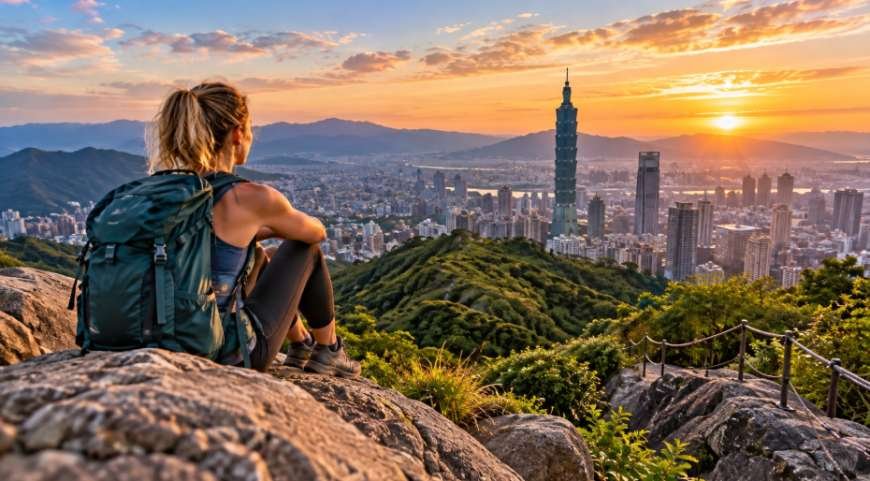
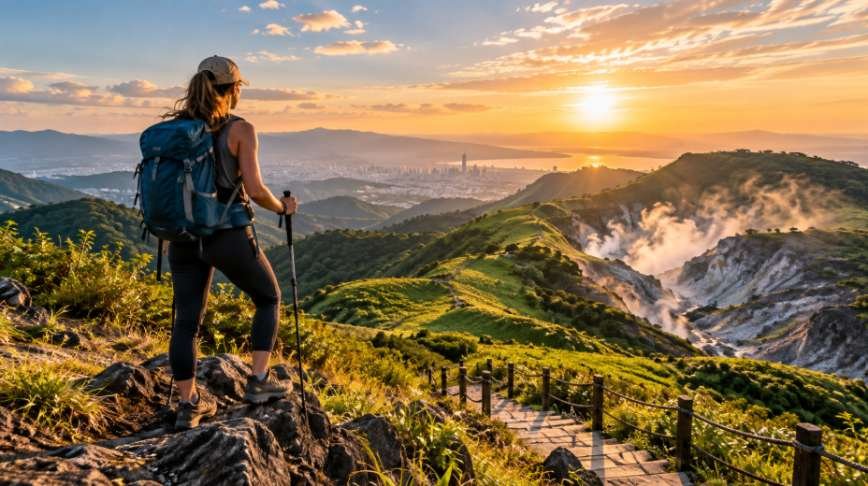
    For a bigger physical challenge, head toward Yangmingshan National Park and tackle Qixing Mountain, Taipei’s highest peak. The climb combines steep stone paths with volcanic scenery, grassland, forest, and geothermal features.

    The route from Xiaoyoukeng is particularly memorable because sulfurous steam rises from the volcanic landscape before the trail climbs toward the summit. On clear days, the Taipei Basin opens beneath you. Weather can change quickly, so carry water, check conditions, and avoid treating the mountain like a casual city walk.

    For a longer outing, the historic Jinbaoli Trail suits hikers who want several hours on their feet.

    Try a Real Rock-Climbing Day

    If hiking feels too familiar, make the trip to Longdong on Taiwan’s Northeast Coast. The sandstone cliffs rise dramatically above the sea and form one of northern Taiwan’s best-known natural climbing areas.

    This suits travelers with climbing experience or people booking a qualified guide. A guided outing can introduce beginners to belaying, route selection, climbing technique, and basic safety without expecting them to learn on a sea cliff alone.

    At Longdong, climbers face the ocean while working across textured rock. The combination of technical movement and coastal exposure is memorable.

    For Jinmian Mountain, starting near Xihu Station can make the approach relatively straightforward. The route has several entrances, so check the intended trailhead before leaving. For Longdong, allow extra travel time because the climbing area is outside central Taipei. Guided canyoning trips also deserve a full-day buffer there when weather or transportation may slow the schedule.

    Get Wet With Canyoning

    For a different adrenaline rush, consider a guided canyoning or river-tracing excursion in northern Taiwan. Trips can involve walking through streams, sliding over natural rock, scrambling through narrow sections, and descending waterfalls with safety equipment.

    Canyoning is not an activity to improvise. Water levels, weather, rock conditions, and route difficulty can change, so use an experienced local operator and follow the guide’s instructions. Wear proper footwear and expect to spend much of the experience wet.

    It suits repeat visitors who want something less conventional.

    Make the Challenge Mental

    Adventure does not always require a mountain. An immersive escape room can create plenty of pressure through time limits, searching, puzzles, and quick decisions.

    Central Taipei has escape rooms for different difficulty levels, making them useful during rainy afternoons. Choose a harder scenario if challenge is the priority. Some rooms emphasize logic, while others add theatrical elements and demanding teamwork.

    The test is similar: stay calm, notice details, communicate clearly, and keep moving while the clock works against you.

    Add an Active City-to-Nature Day
    Add an Active City-to-Nature Day

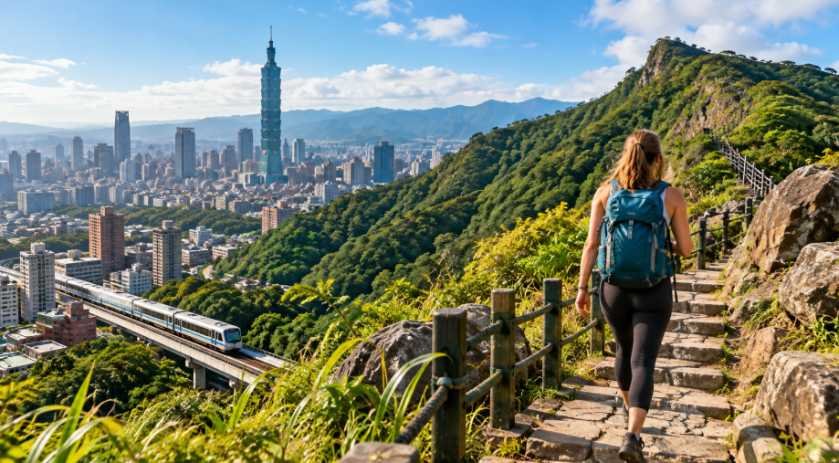
    Taipei’s riverside paths make cycling an easy addition to an adventure-focused itinerary. Renting a YouBike and following a riverside bikeway can turn a few hours into a steady outdoor workout without specialist equipment.

    For a stronger day, pair cycling with a hike, then finish with a meal and hot spring soak. That combination creates a natural rhythm without spending every hour inside crowded attractions.

    Travelers planning other Asian city trips can compare the activity mix with things to do in Tokyo with teenagers, especially when balancing urban and outdoor experiences.

    Travelers looking to extend that city-and-nature combination into Japan can also explore the best places to visit in Kyushu Japan, where volcanic landscapes, coastal scenery, and outdoor experiences offer a different kind of adventure.

    Recover in a Hot Spring

    After a demanding hike or outdoor excursion, a hot spring can be more than a relaxing add-on. Travelers interested in experiencing Asia beyond major attractions can also explore Japan’s lesser-known seasonal traditions and local festivals for a deeper look at regional culture. Beitou and Yangmingshan are known for geothermal waters linked to the region’s volcanic activity, making a soak a natural way to finish an active day.

    Bathing arrangements, hours, and etiquette vary by facility, so check the rules before entering.

    For another seasonal comparison, things to do in Busan in winter can help when building an Asia itinerary around changing weather.

    Plan for Taipei’s Terrain

    Adventure in Taipei rewards preparation more than expensive gear. Grippy shoes, water, sunscreen, lightweight layers, and a compact rain jacket are useful basics. Trails can become slick after rainfall, while summer heat can make a short climb feel much harder.

    Start demanding hikes early, check park notices, and allow more time than the map suggests. Public transportation helps, but bus schedules can affect timing.

    Match the activity to your experience. Turn around when weather, fatigue, or footing becomes questionable.

    Frequently Asked Questions 

    1. What is the best challenging hike in Taipei?

    Jinmian Mountain is a strong choice for experienced walkers who want steep, rocky terrain and scrambling without leaving Taipei.

    2. Is Yangmingshan good for adventure seekers?

    Yes. Qixing Mountain, volcanic landscapes, longer trails, and changing weather provide more demanding options than typical city sightseeing.

    3. Can beginners try rock climbing near Taipei?

    Yes, but beginners should book a qualified guide, especially at Longdong. Instruction and proper safety equipment make the experience far more suitable for newcomers.

    4. What should adventure travelers pack for Taipei?

    Bring grippy hiking shoes, water, sun protection, light rain gear, and layers. Check weather and trail conditions before setting out.

    A More Adventurous Side of Taipei

    What makes Taipei memorable for adventure travelers is the variety packed around a relatively compact city. One day can involve a rope-assisted scramble, volcanic summit, sea cliff, or wet canyon, followed by a comfortable meal and warm soak. Few destinations make that transition feel so natural.

    The best challenge is the one that leaves you tired, satisfied, and already thinking about the next trail.
  • Things To Do In Georgetown Malaysia On A Cloudy Day

    Things To Do In Georgetown Malaysia On A Cloudy Day

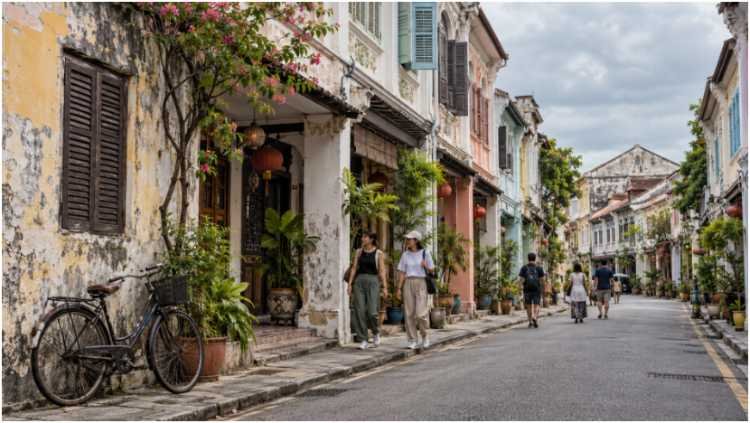
    Gray clouds rolled over Penang Hill on my second morning in Penang, and my first instinct was to grumble. I had planned a full day on foot, and dark skies felt like an interruption. Within an hour, I realized the opposite was true: finding the best things to do in georgetown malaysia on a cloudy day is the ultimate travel hack because cloud cover cuts the brutal equatorial heat and lets you explore without melting.

    According to data from the Malaysian Meteorological Department, Penang routinely logs average daytime highs of 32°C (90°F) with relative humidity hovering between 70% and 90%. Direct sunlight turns the paved shophouse alleys into radiant ovens. 

    When thick cloud cover rolls across the Malacca Strait, the UV index plunges from extreme levels down to manageable numbers, creating prime conditions for sightseeing.

    Why Gray Skies Offer the Ultimate Heritage Walking Window

    Why Gray Skies Offer the Ultimate Heritage Walking Window

    When the sun hides behind thick stratocumulus clouds, step outside immediately. In clear weather, walking through George Town between 11:00 AM and 3:00 PM requires ducking from one shaded five-footway to the next. An overcast sky acts as a giant softbox, giving you comfortable ambient temperatures and diffused light that makes street photography pop.

    If your Southeast Asia travels take you to other dynamic spots, pairing urban walking tours with family-friendly itineraries like things to do in da nang with kids will help you pace hot-weather sightseeing effectively.

    Exploring Armenian Street Murals Without the Sunstroke

    Ernest Zacharevic’s street art put George Town on the modern global map. On sunny days, tourists queue in direct sunlight along Armenian Street and Cannon Street just to snap a photo with Little Children on a Bicycle.

    Overcast mornings change the dynamic completely. I walked from Lebuh Armenian down through Ah Quee Street with cool air on my shoulders, spending ten minutes studying the weathered plaster around Boy on a Bike without wiping sweat from my camera lens. 

    The iron-rod caricatures mounted across historical masonry walls are far easier to read without harsh midday shadows cutting across the brickwork.

    Walking the Clan Jetties Under Coastal Sea Breezes

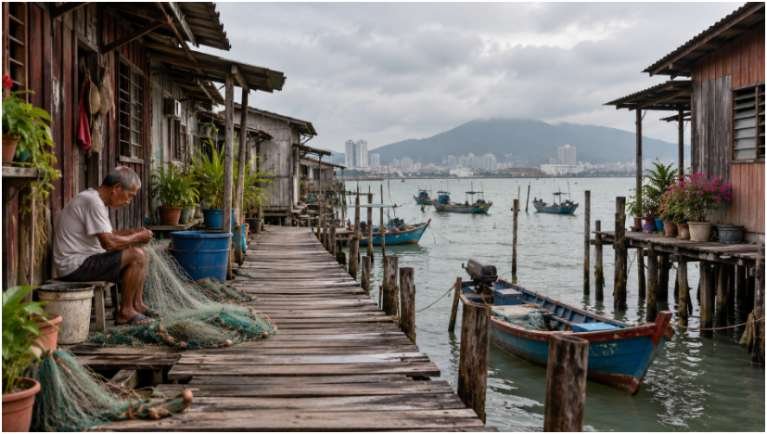
    The Clan Jetties sit directly on wooden stilts over the muddy harbor flats. There is no overhead cover along the main piers of Chew Jetty or Tan Jetty. Visiting under clear skies means enduring direct solar radiation reflected off the water.

    An overcast afternoon brings steady maritime breezes down the Penang Strait. I strolled the wooden planks of Chew Jetty while local residents repaired fishing nets and prepared temple offerings outside their waterfront homes. The timber smelled of salt and rain, and the lack of glare made looking out toward the Butterworth shipping lanes a peaceful experience.

    Grand Heritage Mansions for Midday Drizzle

    Grand Heritage Mansions for Midday Drizzle

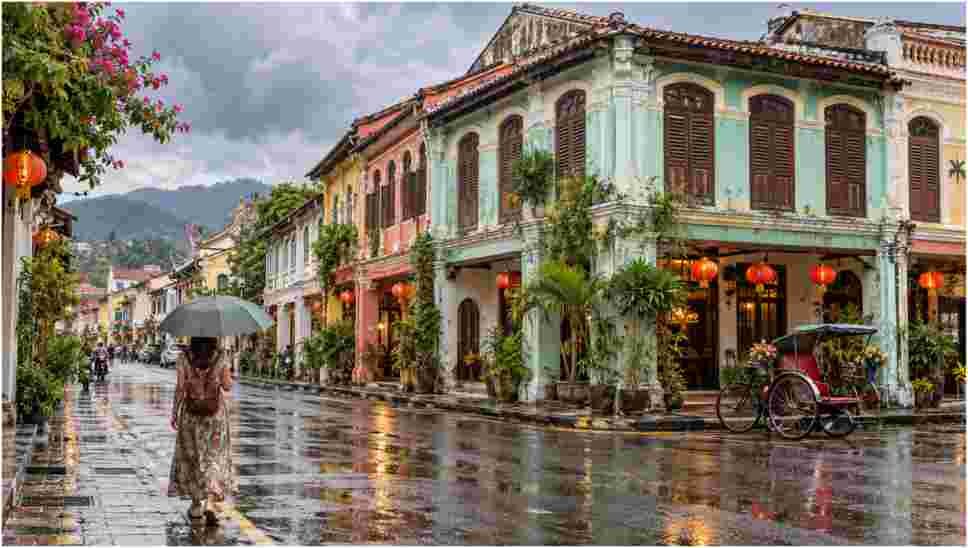
    When the sky shifts from dry gray to a steady mist, pivot toward George Town’s iconic courtyard residences. Designated as a UNESCO World Heritage Site in 2008, the historical core contains thousands of preserved colonial-era shophouses and elite merchant estates. These buildings were engineered for passive tropical cooling and offer expansive covered walkways.

    +—————————+———————————–+

    | Mansion                   | Key Rainy-Day Feature             |

    +—————————+———————————–+

    | Cheong Fatt Tze           | Shaded inner courtyards & tours   |

    | Pinang Peranakan Mansion  | Enclosed galleries with 1,000+ art|

    +—————————+———————————–+

    Cheong Fatt Tze: Courtyard Breezeways and Indigo Lime Wash

    Cheong Fatt Tze: Courtyard Breezeways and Indigo Lime Wash

    Known universally as the Blue Mansion, Cheong Fatt Tze features 38 rooms, five granite courtyards, and striking indigo-tinted external walls. The 19th-century industrialist constructed this compound following strict Feng Shui guidelines, orienting the open courtyards to catch natural air currents and channel rainwater drainage away from living quarters.

    I booked a midday guided tour during an overcast drizzle. Watching rainwater cascade off the carved timber eaves into the central granite drainage basin while sitting dry in the open-air central hall was hypnotic. The docents explain how the building’s louvers, porcelain reliefs, and Scottish ironwork supported a bustling merchant empire.

    Pinang Peranakan Mansion: 1,000 Antiques and Carved Teak

    Located on Church Street, this mint-green mansion recreates the lavish residential culture of the wealthy Baba Nyonya community. Unlike standard minimalist museums, this private palace contains thousands of historical artifacts packed into connected two-story wings.

    When heavy drops start hitting the roof, stepping through its gilded doors keeps you dry for hours. I walked across English floor tiles, past mother-of-pearl blackwood chairs, and through an upstairs jewelry hall filled with gold hairpins and beaded slippers. 

    Because the exterior five-footways and interior atriums connect under continuous roofs, you never need an umbrella once inside.

    Specialty Coffee and Industrial Roasteries for Heavy Rain

    When the monsoon trough triggers an intense downpour, George Town’s cafe culture provides a comfortable shelter. The historic warehouse district along Beach Street and Church Street holds some of the finest specialty roasteries in Southeast Asia.

    Norm Micro Roastery: Skylights and Pour-Overs in a 1904 Warehouse

    Hidden down Gat Lebuh Gereja behind an unmarked facade, Norm Micro Roastery occupies a converted 1904 shipping warehouse. Inside, soaring industrial ceilings and circular skylights allow gray outdoor light to illuminate concrete benches and indoor trees.

    I sat here during a 45-minute deluge, listening to the thunder reverberate against the corrugated rafters. Their single-origin Ethiopian pour-overs are clean and bright, paired with citrus waffles that take 24 hours to ferment. It feels less like an ordinary coffee shop and more like a minimalist architectural sanctuary.

    WHEELER’S on Love Lane: Tropical Comfort Food and Espresso

    Love Lane can get messy when torrential rains pool along the curbs. WHEELER’S solves this problem with a long, sheltered floor plan that opens onto the street while keeping seating protected.

    I took a booth surrounded by indoor hanging vines, ordered an espresso, and watched the downpour wash over the colonial facades across the alley. Their kitchen produces reliable comfort food, from pan-seared sea bass to sourdough sandwiches, making it an easy place to wait out an afternoon storm.

    Covered Night Hawker Feasts When the Skies Open Up

    Covered Night Hawker Feasts When the Skies Open Up

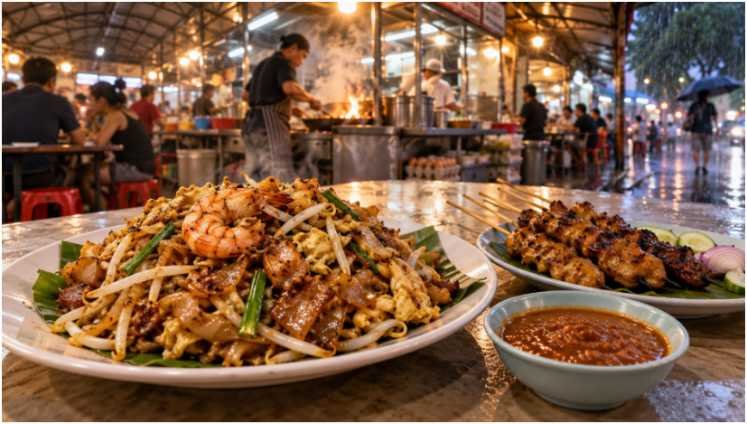
    Penang is celebrated as the street food capital of Malaysia, but open-air sidewalk stalls on Kimberley Street become impractical during evening rain. Fortunately, the city features large-scale covered hawker pavilions that combine dozens of independent cooks beneath continuous roofs.

    +—————————+———————————–+

    | Food Center               | Recommended Covered Eats          |

    +—————————+———————————–+

    | Red Garden Food Paradise  | Char kway teow, satay, laksa      |

    | New World Park            | Swatow Lane ais kacang, or-chien  |

    +—————————+———————————–+

    Red Garden Food Paradise: Sheltered Street Food Variety

    Situated on Lebuh Leith, Red Garden operates under a massive high-span canopy roof. Even during a driving storm, the dining floor stays dry.

    I secured a numbered central table before walking the perimeter stalls to order. The must-try item here is the char kway teow: flat rice noodles seared over roaring charcoal burners with cockles, duck egg, and Chinese sausage, yielding an authentic wok hei (breath of the wok). You order from individual stallholders, give them your table number, and pay when the dishes land in front of you.

    New World Park Food City: Spacious Seating for Wet Evenings

    If you want a wider, calmer environment, New World Park on Burma Road offers an expansive covered food pavilion with wide pedestrian aisles. The Swatow Lane vendors relocated here years ago, bringing historic culinary recipes with them.

    I ordered the fried oyster omelette (or-chien), where plump coastal oysters are folded into a crispy, chewy tapioca batter served with garlic chili dip. The high roofline keeps air moving freely without letting in wind-driven rain, making it an effortless dining choice on wet evenings.

    If your journey across Peninsular Malaysia continues toward quieter coastal getaways, researching quiet islands to visit in malaysia helps balance Penang’s bustling food halls with secluded beaches.

    The Cloudy Day Pivot Matrix: Matching Skies to Sights

    Weather in George Town shifts quickly. To optimize your day, match your activities to sky conditions using this field-tested strategy:

    Overcast & Breezy (Dry)  –>  Armenian St murals & Clan Jetties

    Scattered Light Drizzle  –>  Cheong Fatt Tze & Pinang Peranakan

    Sudden Heavy Downpour    –>  Norm Micro Roastery & Tech Dome KOMTAR

    Sustained Evening Rain   –>  Red Garden or New World Park

    Testing this routine showed that starting outdoors during morning cloud cover and moving indoors right around 1:30 PM keeps you ahead of convection storms that roll in from the west.

    Overcast Weather FAQs for George Town Travelers

    1. Does it rain all day during cloudy periods in George Town?

    No, George Town’s equatorial showers typically arrive in brief, intense downpours lasting 30 to 90 minutes before clearing.

    2. Are George Town’s street art murals accessible when it is overcast?

    Yes, overcast skies provide the best lighting and coolest walking temperatures for viewing and photographing outdoor murals.

    3. Can you walk between major heritage sights while staying dry?

    Yes, George Town’s historic shophouses feature continuous covered porches known as five-footways that shield pedestrians from light rain.

    4. Do covered hawker centers stay open during heavy rain storms?

    Yes, major venues like Red Garden Food Paradise and New World Park operate regular hours under high-span canopy roofs.

    Cloud Cover: Your Secret Weapon in Penang

    Clear blue skies look enticing on travel brochures, but overcast days deliver the most comfortable travel experience in northern Malaysia. Use morning cloud cover to explore the waterfront jetties and painted street walls without the oppressive sun. 

    When the raindrops pick up speed, step into antique Peranakan courtyards and order a hot plate of noodles under a covered food pavilion. Grab your umbrella, head out into the historic streets, and enjoy George Town without the midday burn.

  • Ethnic Food Neighborhoods in the USA Where Every Block Tells a Story

    Ethnic Food Neighborhoods in the USA Where Every Block Tells a Story

    A neighborhood can reveal its history before you ever sit down at a table. The scent of bread drifting from a corner bakery, handwritten menus in multiple languages, crowded produce markets, family-run cafés, and recipes passed between generations all tell you who shaped the streets around you.

    That is what makes exploring ethnic food neighborhoods in the USA such a rewarding way to travel. These communities offer far more than international restaurants. They connect regional dishes with migration, family traditions, local businesses, and everyday American life. 

    From dim sum windows in San Francisco and Korean barbecue in Los Angeles to Cuban coffee in Miami and Yemeni specialties in Dearborn, the neighborhoods below turn a simple meal into a deeper look at America’s cultural landscape.

    Which East Asian and Southeast Asian Food Neighborhoods Should You Visit?

    Chinatown, San Francisco, California

    San Francisco’s Chinatown is recognized as the oldest Chinatown in North America. Grant Avenue delivers the classic architecture and landmarks, while Stockton Street provides a closer look at produce markets and everyday food shopping.

    For travelers who want to continue exploring the region’s coastal food culture beyond San Francisco, a Pacific Northwest seafood road trip offers a different perspective through working waterfronts, fishing communities, oyster farms, and fresh seafood stops across Washington and Oregon.

    I would come hungry for dim sum, egg tarts, steamed shrimp dumplings, roast meats, and Cantonese seafood. Salt-and-pepper Dungeness crab adds a distinctly Bay Area touch.

    Koreatown, Los Angeles, California

    Los Angeles Koreatown covers roughly three square miles and combines Korean businesses with one of the city’s liveliest late-night dining scenes. The neighborhood is particularly known for its concentration of restaurants and 24-hour businesses.

    Try charcoal-grilled Korean BBQ, bubbling tofu stews, cold noodles, dumplings, and double-fried Korean chicken. The combination of dining, nightlife, markets, cafés, and karaoke makes K-Town especially fun after dark.

    Little Saigon, Orange County, California

    Little Saigon, Orange County, California

    Westminster and Garden Grove form the heart of Orange County’s Vietnamese-American community. Large shopping plazas filled with restaurants, bakeries, markets, and Vietnamese-American businesses make Little Saigon ideal for discovering the cuisine beyond a familiar bowl of pho.

    Look for slow-simmered beef noodle soup, crisp bánh mì, bánh xèo savory crepes, rice dishes, Vietnamese coffee, and chè desserts.

    Where Can You Find Standout Latino and Hispanic Food Neighborhoods?

    Pilsen, Chicago, Illinois

    Pilsen combines Mexican-American food culture with murals, galleries, music, and community institutions. Much of the action centers around 18th Street, where family-run restaurants, cafés, bakeries, and taquerias sit near some of Chicago’s most striking public art.

    I would seek out tacos al pastor sliced from a vertical spit, carnitas, birria, pan dulce, and regional Mexican specialties.

    Little Havana, Miami, Florida

    Calle Ocho, or Southwest Eighth Street, is the cultural spine of Little Havana. Cuban food, music, coffee, cigar culture, public art, and neighborhood history make the area inseparable from Miami’s Cuban identity.

    Order a pressed Cuban sandwich layered with ham and roast pork, then pair it with an intensely sweet Cuban espresso. Croquetas, pastelitos, and ropa vieja are also worth making room for.

    Where Should You Go for South Asian and Middle Eastern Food?

    Devon Avenue, Chicago, and India Square, Jersey City

    Devon Avenue in Chicago’s West Ridge neighborhood is one of America’s strongest South Asian culinary corridors. Indian and Pakistani restaurants sit beside sweet shops, grocery stores, traditional bakeries, clothing stores, and international markets. Choose Chicago identifies Devon Avenue as the heart of the city’s Indian and Pakistani communities.

    Jersey City’s India Square provides another concentrated South Asian experience on the East Coast. Across the two destinations, I would look for crisp dosas, fragrant biryani, tandoori breads, chaat, vegetarian thalis, kebabs, sweets, and rich Pakistani-style curries.

    Dearborn, Michigan

    Dearborn, Michigan

    Dearborn is one of America’s most significant Arab American cultural centers. Lebanese bakeries, Yemeni coffeehouses, Middle Eastern grills, halal restaurants, and specialty markets give the area remarkable culinary depth. Visit Detroit highlights East Dearborn as a hub for Arab American restaurants, cafés, bakeries, and businesses.

    Fresh flatbreads, garlic-rich chicken shawarma, grilled meats, hummus, Yemeni rice dishes, baklava, and honeyed pastries are excellent starting points.

    Where Can You Explore European and African Food Traditions?

    Arthur Avenue, The Bronx, New York

    The Belmont section of the Bronx, centered around Arthur Avenue, preserves one of New York City’s best-known Italian-American food districts. Instead of treating it as a one-restaurant stop, I would explore the neighborhood’s indoor market, butchers, bakeries, delis, cheese shops, and pasta stores.

    Fresh pasta, cannoli, filled pastries, cured meats, mozzarella, and brick-oven pizza make this a rewarding destination for old-school Italian-American food culture.

    Washington, D.C., and Silver Spring, Maryland

    The Washington metropolitan area has one of the country’s most prominent Ethiopian-American communities, with restaurants and businesses spread through D.C. and nearby Maryland. Ethiopian dining typically centers on communal plates, aromatic spices, stews, and injera, the soft and tangy flatbread used to scoop up the meal.

    Try doro wat, seasoned lentils, vegetables, tibs, and other stews served over injera. Sharing from the same platter is part of the culinary experience.

    Which Multicultural Food Neighborhood Deserves More Attention?

    Which Multicultural Food Neighborhood Deserves More Attention

    Jackson Heights in Queens stands apart because no single cuisine defines it. Around Roosevelt Avenue and 74th Street, South Asian, Tibetan, Nepalese, Colombian, Mexican, Peruvian, Ecuadorian, and other Latin American traditions overlap. NYC Tourism describes the neighborhood as a culinary destination shaped heavily by its immigrant population.

    For travelers who want to explore how food traditions are preserved through longstanding community spaces, historic food markets in the USA offer another perspective on the relationship between cuisine, immigration, commerce, and local history.

    Momos, dosas, biryani, arepas, ceviche, tacos, sweets, and street snacks can all fit into one afternoon. For travelers searching for international food neighborhoods that remain active everyday community spaces, Jackson Heights is difficult to beat.

    Frequently Asked Questions 

    1. What US city has the most diverse food neighborhoods?

    New York City stands out because Queens, Brooklyn, Manhattan, and the Bronx contain an exceptional range of immigrant food communities. Los Angeles and Chicago are also major destinations for neighborhood-based international dining.

    2. What food enclaves are good for first-time travelers?

    San Francisco Chinatown, Jackson Heights, Koreatown, Little Havana, Dearborn, and Pilsen are approachable choices because travelers can experience food, shopping, culture, and neighborhood history within the same visit.

    3. Are international food neighborhoods only found in major cities?

    No. Suburbs and midsize cities across Michigan, New Jersey, Maryland, Virginia, Minnesota, Texas, California, and other states have thriving immigrant food communities and multicultural restaurant corridors.

    4. Why do these neighborhoods matter to American food culture?

    Ethnic food neighborhoods in the USA preserve culinary traditions while showing how recipes and dining customs evolve across generations. They also reveal how migration continues to influence what Americans eat and how cities develop.

    How Should You Explore Cultural Food Districts Respectfully?

    I try to treat these areas as neighborhoods first and attractions second. Supporting independent businesses, learning dish names, and visiting markets as well as restaurants creates a richer experience.

    Travelers who want to experience that same connection between food, community, and local tradition in a different setting can also explore small-town food festivals in America, where regional specialties and longstanding community customs often come together through shared celebrations.

    That is what makes ethnic food neighborhoods in the USA so rewarding: they connect food with immigration, family businesses, language, history, and everyday community life.

  • Local Festivals Beyond Asia’s Tourist Hotspots That Travelers Often Miss

    Local Festivals Beyond Asia’s Tourist Hotspots That Travelers Often Miss

    I have always found that a destination feels different when a local celebration brings its streets, temples, and village squares to life. Some of my most interesting travel discoveries have come from looking beyond famous landmarks and learning about the events that matter to residents. A festival can reveal a place’s humor, beliefs, family traditions, and relationship with the changing seasons.

    I also noticed that lesser-known celebrations often tell stories that guidebooks overlook. A painted mask, a procession of monks, or a dance performed by neighbors can carry generations of meaning. Across Asia, these gatherings offer travelers a chance to understand regional identity more deeply, provided they arrive with curiosity, patience, and respect for the people keeping these customs alive.

    Why Local Festivals Reveal Another Side of Asia

    Major celebrations such as Diwali, Songkran, and Lunar New Year attract international attention, but smaller regional events can reveal equally rich cultural histories. Many grew from farming calendars, Buddhist observances, local legends, or a community’s shared hopes for health and prosperity.

    These festivals are not performances created solely for visitors. Residents organize ceremonies, prepare traditional food, make costumes, and pass responsibilities between generations. Visitors who understand that distinction can appreciate the celebration without treating local customs as entertainment staged for them.

    Local Festivals Beyond Asia’s Tourist Hotspots

    Local Festivals Beyond Asia’s Tourist Hotspots

    Hokkai Heso Matsuri, Japan

    In Furano, Hokkaido, the Hokkai Heso Matsuri turns an unusual idea into a joyful summer celebration. Known as the Belly Button Festival, it features participants with expressive faces painted across their stomachs. They dance through the streets, transforming their torsos into comic characters while spectators enjoy music, food stalls, and the lively atmosphere.

    The festival reflects Furano’s identity as a place near the geographic center of Hokkaido. Its humor and community participation make it different from Japan’s more widely recognized religious processions and seasonal festivals. The event is generally held on July 28 and 29, although travelers should check official announcements before booking.

    Bun Luang and Phi Ta Khon, Thailand

    In Dan Sai, Loei Province, the Bun Luang Festival combines Buddhist ceremonies with the striking masked procession known as Phi Ta Khon. Participants wear handmade ghost masks, colorful costumes, and bells, filling the streets with movement and noise. The masks draw on local folklore and traditions passed between generations.

    The celebration is more than a parade. Religious rituals and merit-making ceremonies form part of the event, connecting its playful atmosphere with the community’s spiritual life. The festival usually takes place around June or July, but dates vary. Visitors should check the annual schedule and follow local instructions, particularly around temple ceremonies.

    Tak Bat Devo, Thailand

    Tak Bat Devo offers a quieter experience. Held after the end of Buddhist Lent, the alms-giving ceremony commemorates the Buddha’s descent from the heavenly realm in Buddhist tradition. In places such as Uthai Thani, monks descend temple steps while people offer food and other necessities.

    The early morning procession can be moving to witness, but its purpose is religious rather than theatrical. Visitors should dress modestly, keep pathways clear, and avoid interrupting people making offerings. Photography should never take priority over the ceremony or the comfort of worshippers.

    Chapchar Kut, India

    In Mizoram, northeastern India, Chapchar Kut marks a seasonal pause after the demanding work of clearing bamboo and preparing fields. Communities gather for traditional music, dancing, colorful clothing, and shared celebrations. The Cheraw bamboo dance, in which performers move rhythmically between clapping bamboo poles, is a particularly recognizable feature of Mizo cultural expression.

    The festival offers insight into the connection between agricultural life and community identity. It also shows how regional traditions remain meaningful in a country with many distinct languages and cultural practices.

    Boun Ok Phansa, Laos

    Boun Ok Phansa marks the end of Buddhist Lent in Laos. In riverside communities, the occasion may include temple ceremonies, offerings, and illuminated boats or floating decorations. Some locations also hold boat races, bringing residents together along the water.

    The exact activities depend on the town, so travelers should research local celebrations rather than assume every destination follows the same program. Staying nearby can make it easier to attend early ceremonies and understand how the religious observance shapes the wider gathering.

    How Festivals Keep Regional Traditions Alive

    How Festivals Keep Regional Traditions Alive

    Festivals create opportunities for artisans, musicians, cooks, and performers to share skills that might otherwise receive less attention. Masks, costumes, songs, and ceremonial practices often carry knowledge that is learned through participation rather than written instruction.

    Yet traditions can change as younger generations move to cities and tourism grows. Some communities adapt performances or introduce workshops to keep local interest alive. Others limit access to sacred activities. Learning about Asia’s disappearing cultural traditions helps travelers recognize why preservation involves more than photographing an event. It also means respecting the community’s right to decide what should be shared.

    How to Experience Local Festivals Respectfully

    Plan around the community’s calendar, not simply your preferred travel dates. Some festivals follow lunar or religious calendars, and dates can change each year. Book transport and lodging early when a small town expects large crowds.

    A few habits can make a visit more considerate:

    • Ask before photographing people, children, religious ceremonies, or private rituals.
    • Follow dress guidance and remove shoes wherever required.
    • Buy food and crafts from local vendors when possible.
    • Keep entrances, processional routes, and places of worship clear.

    Avoid assuming that every ceremony welcomes participation. A visitor may be welcome to watch but not to join a ritual. Local organizers, guides, and residents can explain the difference.

    Urban celebrations also deserve attention. Communities in large cities often maintain neighborhood processions, temple observances, and craft traditions despite rapid development. Exploring modern cities preserving ancient traditions can reveal how heritage adapts to contemporary life without losing its local significance.

    FAQs: Local Festivals Beyond Asia’s Tourist Hotspots That Travelers Often Miss

    1. Which Asian festivals are less familiar to international travelers?

    Hokkai Heso Matsuri in Japan, Chapchar Kut in India, and Tak Bat Devo in Thailand offer distinctive regional experiences beyond the best-known festival calendar.

    2. When should I plan a festival trip?

    Research the specific event first. Many festivals follow seasonal, lunar, or Buddhist calendars, so dates may change annually.

    3. Can visitors participate in local festivals?

    Sometimes. Public dances and community activities may welcome visitors, while sacred ceremonies may be reserved for worshippers or local participants.

    4. How can I avoid disrespecting local customs?

    Read local guidance, dress appropriately, ask before taking photographs, and follow instructions from organizers. Observe quietly when unsure.

    The Traditions Worth Carrying Forward

    A memorable festival visit is not measured only by colorful photographs or the number of events attended. It can come from understanding why neighbors gather, how a ritual connects people to their ancestors, or why a particular dance remains important to younger generations. These details give a destination depth beyond its familiar attractions.

    Travel with an open mind, support local communities, and leave room to listen. The most meaningful discovery may be a tradition you had never heard of, celebrated by people who are happy to keep it alive on their own terms.

  • Best Photography Spots and Activities in Jaipur: A Visual Field Guide

    Best Photography Spots and Activities in Jaipur: A Visual Field Guide

    I remember stepping onto the dusty terracotta tiles of Badi Chaupar as the morning call to prayer echoed against sandstone walls. The desert dawn turns the city’s signature salmon-pink facades into warm, glowing embers. If you are hunting for the best photography spots and activities in jaipur, you quickly learn that timing and light angle dictate whether your photos look washed out or stunning.

    Photographing this heritage capital requires a deliberate plan. Between managing harsh midday glare and moving through dense bazaars, here is how I captured the city’s finest angles.

    Sunrise to Midday: Capturing Jaipur’s Iconic Architecture

    The sun over Rajasthan rises rapidly, casting long architectural shadows before creating intense dynamic contrast. You will want to reach your primary outdoor locations right at first light.

    Patrika Gate: Symmetrical Framing Before the Crowds

    Located at Jawahar Circle Park on the southern edge of town, Patrika Gate is a vivid tribute to Rajasthani craftsmanship. Each archway reveals hand-painted murals depicting battles, royal weddings, and vibrant regional folk art.

    I arrived at 6:15 AM, just as the park opened. Arriving early allowed me to stand dead center along the central corridor without other visitors walking through the frame. To capture the entire series of receding arches, mount a 16–35mm ultra-wide lens. 

    Keep your camera at chest height to prevent vertical lines from keystoning. As the morning sun creeps through the eastern pillars, bracket your exposures by +/- 2 EV to preserve the rich pastel colors without blowing out the highlights on the outer pavement.

    Hawa Mahal: Elevated Perspectives and Street Rhythm

    Hawa Mahal: Elevated Perspectives and Street Rhythm

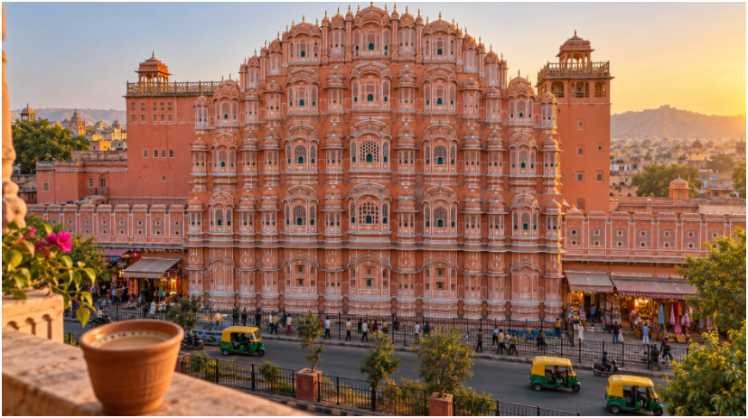
    The 1799 “Palace of Winds” features 953 honeycombed jharokhas (latticed balconies) carved out of pink sandstone. Royal women once used these windows to watch daily street festivals while remaining out of public view.

    Photographing this façade from street level means dodging heavy rickshaw traffic and electrical wires. Instead, cross the road and head up to one of the upper-floor cafés, such as The Tattoo Café or Wind View Café. Order an early-morning chai, secure a balcony railing seat, and frame the façade with a 24–70mm lens. 

    The early sun hits the front of the palace directly between 7:00 AM and 8:30 AM. For evening shoots, switch to a slow shutter speed (around 1/4 second) with an ND filter to turn the buzzing tuk-tuks below into light trails beneath the illuminated wall.

    Panna Meena Ka Kund: Geometry and Dynamic Shadows

    Panna Meena Ka Kund: Geometry and Dynamic Shadows

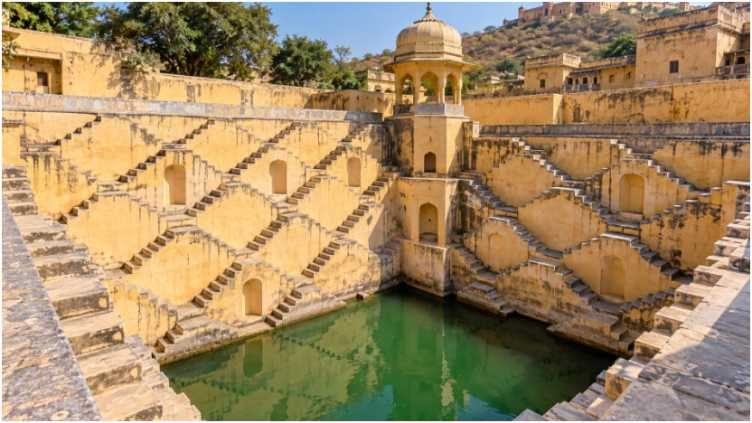
    Hidden near the base of Amber Fort sits Panna Meena Ka Kund, a symmetrical stepwell dating back to the 16th century. Its crisscrossing, chevron-style golden stairs lead down into deep jade-green water.

    Most travel guides tell you to shoot here at sunrise, but I found the opposite works better. When the sun is too low, the deep stepwell remains shrouded in heavy, muddy shadows. Wait until around 9:30 AM when the sun rises high enough to illuminate one side while throwing the opposing steps into crisp, hard-edged shadow. 

    Stand on the southwest corner of the upper terrace with a 35mm lens to compose a clean, geometric frame. Stepwells are managed under heritage preservation rules overseen by the Archaeological Survey of India, meaning descending the stairs is strictly prohibited. Keep your camera focused on the diagonal patterns from the rim.

    Amber Fort and Jal Mahal: Water Reflections and Hilltop Fortifications

    Amber Fort and Jal Mahal: Water Reflections and Hilltop Fortifications

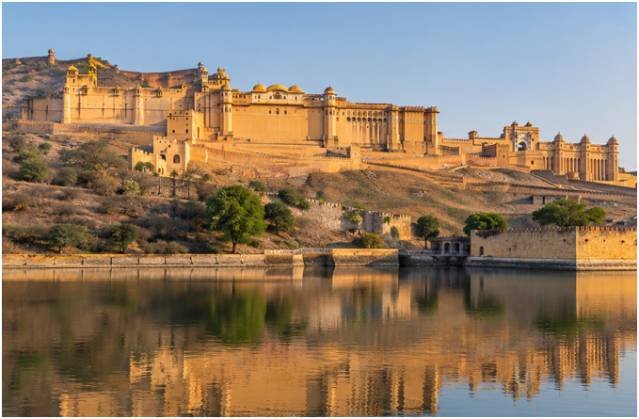
    Before midday heat washes out the hills, drive north toward Amer. The colossal UNESCO World Heritage Amber Fort commands the rocky ridge above Maota Lake.

    Inside the complex, the Sheesh Mahal (Mirror Palace) offers a stunning visual display. Convex glass mirrors inlaid into the plaster shimmer under any ambient light. To capture detail without flash, set your aperture wide (f/2.8) and push your ISO to 1600.

    On your return journey back toward the city center, pull over along the promenade facing Jal Mahal, the floating water palace on Man Sagar Lake. While entering the palace is restricted, the lake promenade provides an unobstructed panoramic view. 

    A 70–200mm telephoto lens isolates the submerged palace against the rugged Aravalli range. Use a Circular Polarizer (CPL) to cut water glare and deepen the reflection across the lake surface.

    Immersive Street Photography Activities in the Pink City

    Jaipur is just as captivating on its streets as it is in its palaces. The walled city pulses with color, scent, and character.

    Navigating the Morning Flower and Spice Bazaars

    Navigating the Morning Flower and Spice Bazaars

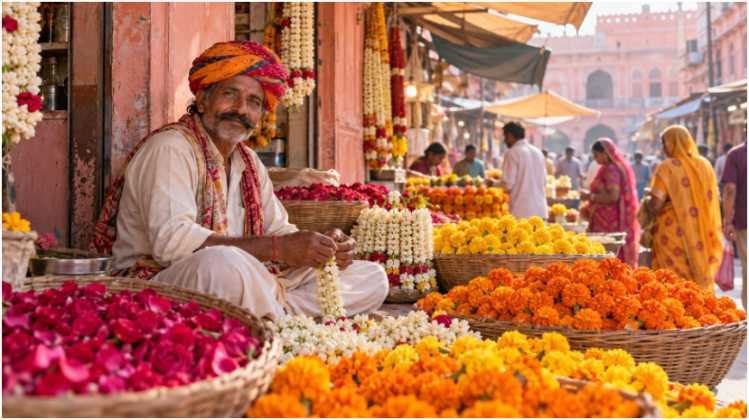
    Skip the air-conditioned tour buses and take a walk through the Old City’s wholesale flower market (Phool Mandi) near Chhoti Chaupar around 6:30 AM. Massive burlap sacks overflow with orange marigolds, fragrant damask roses, and jasmine garlands.

    Street portraiture here demands patience and mutual respect. I keep a fast 50mm f/1.8 lens mounted to isolate individual vendors from the visually busy backgrounds. Always make eye contact, smile, and ask for a nod of permission before raising your lens. 

    The soft ambient light filtering through the bazaar awnings creates warm skin tones without harsh shadows. If you want environmental portraits of local craftsmen, walk through Tripolia Bazaar to capture brass beaters and lac bangle artisans working within their historic street-level workshops.

    Finding Jaipur’s Century-Old Street Darkroom

    One of the most unique photographic activities in India lives right on the sidewalk outside Hawa Mahal. Keep an eye out for Tikam Chand, a third-generation street photographer who operates a wooden Carl Zeiss camera built in the 1860s.

    For a few hundred rupees, you can sit on his wooden stool while he captures your portrait on paper negative. He develops and fixes the print on the spot inside the camera’s self-contained darkroom box, using buckets of water and chemical trays balanced on the curb. Documenting his analog process with your digital camera provides a rare behind-the-scenes view of living photographic history.

    Jaipur ranks among the most captivating historic cities to visit for visual storytellers. The capital of Rajasthan blends symmetrical Rajput design with intricate Mughal masonry. 

    Essential Camera Gear and Technical Strategies for Harsh Desert Light

    Shooting in Rajasthan introduces two consistent challenges: blowing dust and intense dynamic range.

    • Bring a Circular Polarizer: Sandstone surfaces reflect bright midday sun, which strips away the rich reddish-pink pigments in your RAW files. A polarizer restores deep color saturation to the stonework and pulls detail out of hazy desert skies.
    • Leave the Full-Size Tripod at Your Hotel: Heritage sites like City Palace and Amber Fort strictly prohibit three-legged tripods without expensive commercial permits. Security guards will turn you away at baggage checks. Instead, carry a compact tabletop pod or shoot handheld with image-stabilized lenses.
    • Pack Sensor Swabs and a Rocket Blower: The dry wind off the Thar desert carries fine sand particles. Never change lenses out in the open during windy bazaar walks. Duck inside a courtyard or change gear inside your shoulder bag.

    Frequently Asked Questions About Jaipur Photography

    1. What is the best month to photograph Jaipur?

    November through February offers pleasant temperatures, clear morning skies, and manageable midday light.

    2. Do I need a camera permit for Jaipur’s forts?

    Handheld still cameras are allowed for a nominal fee at entry ticket counters, but commercial gear and tripods require special clearance.

    3. Can you fly camera drones over Jaipur’s monuments?

    No, recreational drone flights over urban heritage sites and forts are strictly forbidden by Indian civil aviation regulations.

    4. Which spot offers the best sunset view in Jaipur?

    Nahargarh Fort provides the premier vantage point to capture the entire illuminated city grid during golden hour.

    Frame the Pink City Before the Light Fades

    Jaipur rewards photographers who wake up early and stay alert to changing light. Set your alarm well before sunrise, pack an ultra-wide zoom alongside a fast prime, and let the morning light guide you through the city’s historic streets.

  • Fun Things to Do in Osaka for Couples on a Romantic Trip

    Fun Things to Do in Osaka for Couples on a Romantic Trip

    Fun Things to Do in Osaka for Couples on a Romantic TripI noticed that Osaka has a different kind of romantic energy. The city can feel loud and playful around Dotonbori, then suddenly quiet in a lantern-lit alley or peaceful park. That contrast makes a couple’s day feel less like checking off attractions and more like moving through different moods together.

    I also found that the best date ideas here are not always the most traditionally romantic ones. Sharing street food, laughing through an attraction, watching the skyline change at sunset, or soaking after a long day can create better memories than simply visiting another landmark. That mix is what makes Osaka especially fun for couples.

    Take in Osaka From Above

    Start with a city view when you want an easy romantic win. Harukas 300, inside Abeno Harukas, rises 300 meters above Tennoji and gives couples a panorama across Osaka and the surrounding region. Sunset is appealing because the city shifts from warm daylight into a field of lights. The observation deck is also recognized locally as a romantic destination, so it fits naturally into an evening date.

    Umeda Sky Building offers a different experience. Its Kuchu Teien Observatory has an open-air rooftop atmosphere and broad views from the Umeda area. Going near sunset gives you two experiences in one: daylight over the city followed by the first wave of nighttime illumination. If you want something shorter and playful, HEP FIVE Ferris Wheel is an option in Umeda. The enclosed cars give you a little privacy while the wheel makes its slow circuit above the busy neighborhood.

    Turn the Evening Into an Experience

    Turn the Evening Into an Experience

    Dotonbori is obvious, but it earns its place because it is fun to explore together. Walk beside the canal, browse small shops, share takoyaki or okonomiyaki, and let the night develop without a strict schedule. The neon signs and constant movement give the area an energetic backdrop for a casual date.

    For something more memorable, look for a river cruise. The Tonbori River Jazz Boat combines a roughly 40-minute ride with live jazz while the neon-lit Minami streets pass by. It is a particularly good choice when you want sightseeing without spending the entire evening walking. The service is seasonal in 2026, with scheduled operation on Fridays, Saturdays, Sundays, and holidays through November 15, so checking the current timetable before going is sensible.

    After the cruise, wander into Hozenji Yokocho. The narrow stone-paved lane feels worlds away from the bright commercial streets nearby. Lanterns, traditional restaurants, and the small Hozenji temple create a slower setting where you can talk, stop for dinner, or simply take a few unhurried minutes together.

    Make Time for a Relaxing Date

    A romantic trip does not need to stay busy. Solaniwa Onsen Osaka Bay Tower is a good reset after several days of sightseeing. The large hot spring complex has natural hot spring baths, private baths, relaxation areas, dining, and a rooftop Japanese garden. Couples who want more privacy can consider a private bath, while the broader facility works well when you simply want to slow down.

    For a nature break, head toward Minoh. Minoh Park offers a forested walking route leading to Minoh Falls, a 33-meter waterfall outside central Osaka. The walk changes the pace completely, especially after crowded neighborhoods and busy attractions.

    Couples visiting Japan during the fall can also explore the top things to do in Hokkaido in autumn for colorful landscapes, seasonal outdoor experiences, and a quieter contrast to Osaka’s urban atmosphere. It can also make a useful daytime escape before returning to the city for dinner.

    It can also make a useful daytime escape before returning to the city for dinner.

    Add a Little Fun to the Itinerary

    Add a Little Fun to the Itinerary

    Not every couple wants a quiet date. Universal Studios Japan can turn a day into something much more playful, particularly for pairs who enjoy rides, themed areas, and shared experiences. Give yourselves permission to be tourists together instead of trying to make every stop sophisticated.

    Another easy idea is building a food-focused date around Osaka’s neighborhoods. Rather than booking one expensive dinner, sample several local specialties as you move through Namba or Dotonbori. Trying different dishes gives you natural pauses to compare favorites, find something unexpected, and keep exploring.

    If your itinerary also includes Japan’s capital, you can save planning ideas for things to do in Tokyo with teenagers when traveling with family members. For Osaka, keep the couple-focused plans centered on experiences you can enjoy at the same pace.

    Pair Nearby Experiences Instead of Crossing the City

    Osaka becomes easier to enjoy when you group activities by area. In Umeda, combine the HEP FIVE Ferris Wheel with the Umeda Sky Building and dinner nearby. Around Namba, pair Dotonbori with Hozenji Yokocho and a river cruise. In Tennoji, combine Harukas 300 with shopping, a meal, or a walk through the surrounding neighborhood.

    If you are extending your Japan trip beyond Osaka, the best places to visit in Kyushu Japan offer a contrasting mix of volcanic landscapes, coastal scenery, historic towns, and distinctive regional experiences

    That approach leaves room for spontaneous stops, which can be surprisingly important on a romantic trip. You may discover a tiny dessert shop, pause for a photo, or decide that sitting somewhere with a drink sounds better than rushing to the next attraction. That flexibility is part of the city’s appeal.

    Frequently Asked Questions 

    1. What is the most romantic area in Osaka for couples?

    Dotonbori and Hozenji Yokocho work well for couples because they combine lively nightlife with quieter streets, food, and atmospheric scenery.

    2. Is Osaka good for a romantic trip?

    Yes. Couples can mix city views, cruises, hot springs, neighborhood walks, entertainment, and food without needing a rigid itinerary.

    3. What can couples do in Osaka at night?

    Try a river cruise, explore Dotonbori, walk through Hozenji Yokocho, or visit an observation deck around sunset for a memorable evening.

    4. What is a relaxing couple activity in Osaka?

    Solaniwa Onsen is a strong choice for slowing down together, especially after several active sightseeing days.

    Let the City Set the Pace

    The best romantic days in Osaka do not need to follow a perfect schedule. Start with a view, wander through a lively neighborhood, share something delicious, then choose an experience that matches your energy. Some days might end with jazz on the river or lights from a rooftop, while others might call for a long soak and an early dinner. That flexibility is part of the city’s appeal.

    A good couple’s trip leaves space for moments you never planned. If you are extending your Asia itinerary, things to do in Taipei for adventure seekers can help shape the next leg. In Osaka, those moments can be as simple as laughing over a shared snack or watching the skyline brighten together.

  • Exciting Outdoor Things to Do in Borneo Sabah

    Exciting Outdoor Things to Do in Borneo Sabah

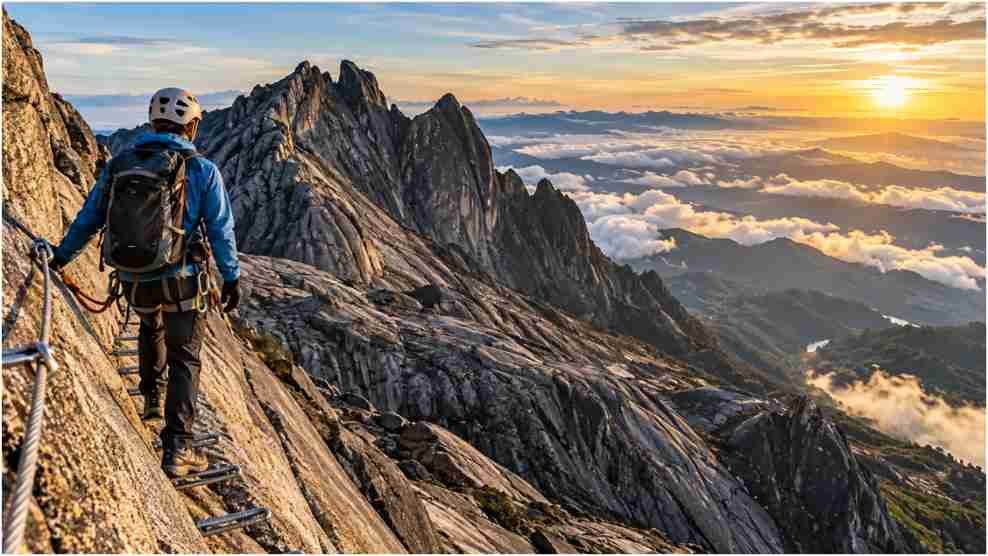
    My boots hit the slick granite of Mount Kinabalu just as the mist broke, exposing a 3,000-foot drop beneath my harness. If you want raw adrenaline paired with prehistoric wilderness, chasing exciting outdoor things to do in borneo sabah delivers an unmatched punch. Sabah bridges jagged 13,000-foot granite spires and vertical oceanic drop-offs within a single border. I spent three weeks testing its wildest routes, and the sheer density of terrain here will ruin ordinary vacations for you forever.

    +———————————————————————————–+

    |                        SABAH EXPEDITION LOGISTICS AT A GLANCE                     |

    +———————-+——————–+—————–+———————+

    | EXPEDITION           | REGION             | PHYSICAL DEMAND | KEY LOGISTICAL RULE |

    +———————-+——————–+—————–+———————+

    | Mount Kinabalu Climb | West Coast / Ranau | Extreme         | 163 permits/day     |

    | Mountain Torq Route  | Mount Kinabalu     | High            | Strict 3:30 PM cutoff|

    | Padas River Rafting  | Tenom Gorge        | High            | Vintage diesel rail |

    | Kinabatangan Safari  | Sandakan / Sukau   | Low             | Dawn/dusk departures|

    | Sipadan Deep Walls   | Celebes Sea        | Moderate to High| AOW cert + 254 cap  |

    +———————-+——————–+—————–+———————+

    Scaling Mount Kinabalu and the Mountain Torq Via Ferrata

    Scaling Mount Kinabalu and the Mountain Torq Via Ferrata

    Climbing Malaysia’s highest peak is a rite of passage, but the typical summit walk misses the real thrill. The mountain rises to 4,095 meters (13,435 feet) above the clouds, anchored within the ancient tropical forests recognized by the UNESCO World Heritage Convention.

    Pushing Past Panalaban to Low’s Peak

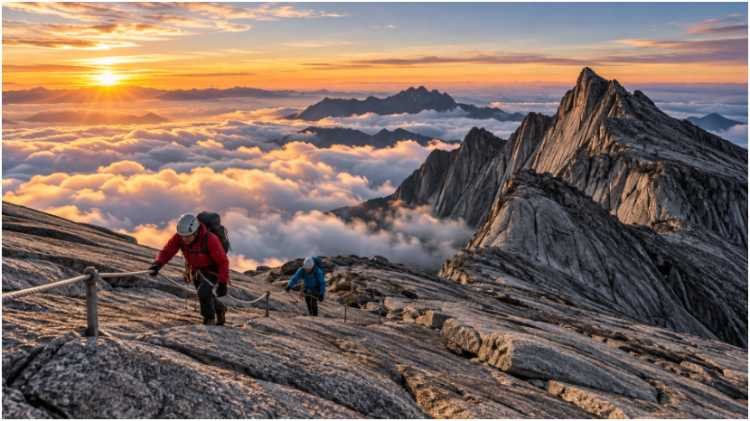
    I started the climb at Timpohon Gate, cutting through moss-draped oak canopies before breaking into alpine scrub. You must climb 6 kilometers and ascend 1,400 vertical meters on day one to reach Panalaban Base Camp. 

    It punishes your quads with endless uneven wooden steps. I rested four hours in an unheated dormitory before our 2:30 AM push. Moving in darkness by headlamp, you scramble up sheer granite slabs aided by thick white ropes. Reaching Low’s Peak at dawn treats you to deep purple skies across Borneo, but the actual descent is where the pulse spikes.

    Walking the High-Altitude Iron Road

    Instead of walking down the standard summit path, I clipped into Mountain Torq, certified as the highest via ferrata in the world. Hanging off steel rungs hammered directly into vertical granite at 3,776 meters clears your head instantly. You walk across a monkey bridge made of three steel cables spanning a yawning abyss. Every step vibrates beneath your boots.

    Mount Kinabalu Summit (4,095 m)

           │

           ▼ [Pre-dawn rope scramble]

    Sayat-Sayat Checkpoint (3,668 m)

           │

           ▼ [Enter Iron Road harness line]

    Mountain Torq Via Ferrata (3,776 m to 3,520 m)

           │

           ▼ [Granite suspension cable traversal]

    Pendant Hut / Panalaban (3,289 m)

    The park issues only 163 climbing permits per day through Sabah Parks Board of Trustees, so reserve your slot months ahead.

    Navigating Roaring White Water and Canopy Trails

    Navigating Roaring White Water and Canopy Trails

    Moving inland reveals deep canyons and primary rainforest canopies that challenge land-based trekkers.

    Rattling to the Rapids on the Padas River Train

    The journey to the Padas River is pure old-school adventure. You cannot drive there. I boarded an antique, rattling diesel train in Beaufort that squeaked alongside the gorge toward Pangi Station. 

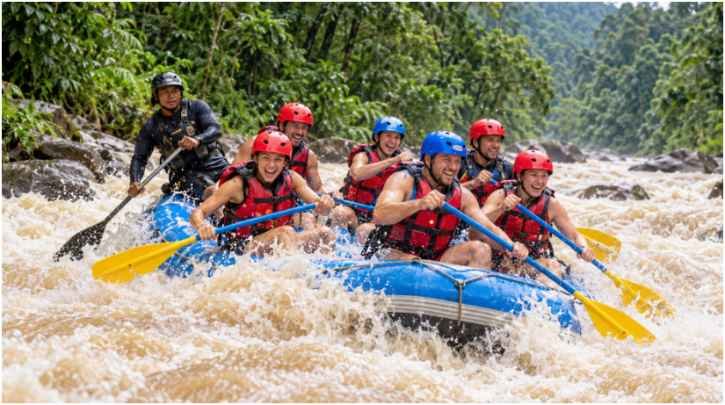
    The river cuts through a narrow limestone canyon, kicking up sustained Grade III and IV rapids. We dropped into waves that swallowed our eight-man raft whole. Our guide steered us through churning hydraulics bearing names like “Head Hunter” and “Scoop.” The river runs wild, swollen by mountain runoff, making helmets and life vests mandatory armor.

    Tracking Night Gliders at the Rainforest Discovery Centre

    In Sepilok, the Rainforest Discovery Centre lets you walk 28 meters up in the canopy along heavy steel bridges. Daytime offers hornbill views, but the forest transforms after sunset. On my guided night trek, our flashlights caught the massive red silhouette of a giant flying squirrel leaping across a 40-meter gap. 

    Walking quietly along leaf-strewn paths, we spotted sleeping kingfishers curled into balls and the luminous eyes of slow lorises hunting along vine tangles.

    Tracking the Borneo Big Five on the Kinabatangan River

    Tracking the Borneo Big Five on the Kinabatangan River

    If your legs need recovery after mountain summits, trade trekking poles for boat safaris. Sabah’s most biodiverse wildlife corridor hugs the Kinabatangan River, which ranks high among the premier nature destinations in sabah and sarawak borneo.

    Dawn Cruises Through Mist and Oxbow Lakes

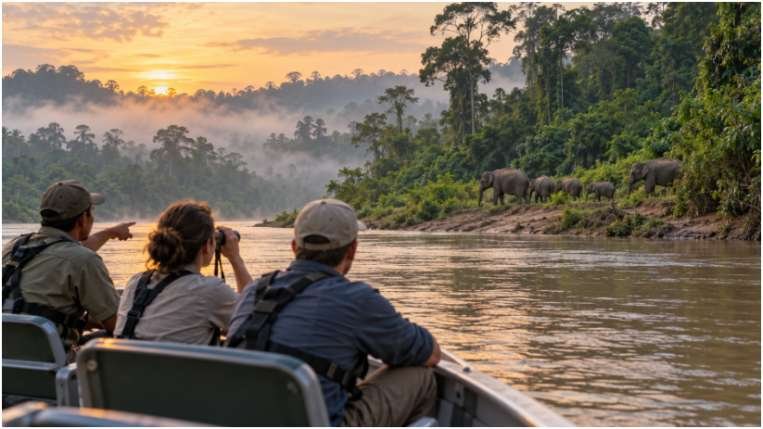
    I rolled out of my jungle lodge at 5:30 AM into thick river mist. Dawn along the Kinabatangan is loud. Rhinoceros hornbills flap overhead with wings that sound like small aircraft engines. Within two days on the water, I logged Borneo’s iconic wildlife:

    • Pygmy elephants: A family herd stripped mud banks and chewed reeds just fifteen feet from our idling bow.
    • Proboscis monkeys: Alpha males with bulbous noses bellowed across the canopy to establish evening territories.
    • Wild orangutans: We watched a mature female construct an overnight branch nest high in a fig tree.
    • Estuarine crocodiles: Prehistoric twelve-footers slid down muddy shorelines into the dark brown river current.

    Plunging into the Oceanic Abyss at Sipadan Island

    Plunging into the Oceanic Abyss at Sipadan Island

    From Sandakan, I headed south toward Semporna to reach the Celebes Sea. Sabah’s marine boundary drops into deep ocean trenches, providing a sharp contrast to the peaceful, quiet islands to visit in malaysia.

     0 m ── Reef Flat (Sea turtles, white-tip reef sharks)

            ┌──────────────────────────────────────────────

    -20 m ──│ Coral Wall Drop-off

            │   • Swirling barracuda vortexes

    -40 m ──│   • Hunting jackfish schools

            │   • Advanced Open Water limit

    -600 m ─┴── Oceanic Trench Floor

    Drifting Walls at Barracuda Point

    Sipadan is Malaysia’s only oceanic island, formed by living corals growing over an extinct volcanic cone that drops 600 meters to the seafloor. Slipping backward off the dive boat, the water clarity hit 30 meters immediately. 

    At Barracuda Point, thousands of chevron barracudas circled in a massive, spinning tornado that blocked out the tropical sun. Green sea turtles rested on almost every coral ledge.

    Sabah Parks caps access to 254 dive permits per day, and all divers must hold an Advanced Open Water certification.

    The Tactical Logistics Playbook: How I Chain High Peaks to Deep Reefs

    Planning an aggressive expedition here requires careful sequencing. Do not mix your elevations carelessly.

          [ HIGH ALTITUDE ]                [ OCEAN DEPTHS ]

           Mount Kinabalu                   Sipadan Diving

              4,095 m                           -30 m

                 │                                ▲

                 ▼                                │

          Panalaban Base                 24-Hour Wait Window

             (3,272 m)                      (Ground Safaris)

                 │                                │

                 └──────► Kinabatangan River ─────┘

                          (Sea Level Buffer)

    1. Climb before you dive: Flying or ascending to high altitudes after deep scuba diving can trigger decompression sickness. I tackled the 4,095-meter summit of Kinabalu first, traversed east to the river basin, and finished underwater at Sipadan. Following safety guidelines from Divers Alert Network (DAN), I kept a 24-hour surface interval between my last dive and my return flight out of Tawau.
    2. Pack two distinct kits: Kinabalu drops to 2°C (35°F) with freezing windchill, requiring thermals, windbreakers, and fleece gloves. Down on the river and islands, daily highs reach 33°C (91°F) with 85% humidity. Bring lightweight merino base layers, dedicated leech socks for jungle trails, and reef-safe sunscreen.
    3. Internal connections: Skip the bumpy 10-hour overland roads between coasts. Take the 45-minute domestic flight from Kota Kinabalu (BKI) to Sandakan (SDK), then hire private overland transfers down to Semporna.

    Frequently Asked Questions About Sabah Outdoor Adventures

    1. What is the hardest outdoor activity in Sabah?

    The Mount Kinabalu summit push combined with the Low’s Peak Circuit via ferrata demands the highest cardiovascular stamina and technical balance.

    2. When is the best time for outdoor activities in Borneo Sabah?

    The dry window between March and September provides the clearest diving visibility, firmer hiking trails, and the lowest chance of summit weather closures.

    3. Can beginners dive at Sipadan Island?

    No, Sabah Parks mandates an Advanced Open Water certification or a minimum logged dive threshold to protect both divers and the delicate coral wall.

    4. Do I need leech socks for jungle trekking in Sabah?

    Yes, warm and damp forest floors in Danum Valley, Kinabatangan, and Maliau Basin make leech socks essential gear to prevent bites.

    Stop Daydreaming and Pack Your Mud Boots

    Sabah will leave you bruised, sun-kissed, and utterly hooked on wilderness travel. You can spend an entire lifetime chasing lesser sights, or you can clip into a suspension bridge hanging 3,700 meters over Borneo’s clouds and watch the world wake up. 

    Lock in your mountain climbing slots and marine permits at least six months out, break in your trail runners now, and claim your spot on the wild edge of Malaysia.

  • How to Plan a Family Trip to Asia With Young Children

    How to Plan a Family Trip to Asia With Young Children

    I would put a child’s bedtime on the itinerary before adding a famous temple. That small decision shapes everything else: arrival flights, hotel locations, sightseeing, and how enjoyable the holiday feels. 

    When considering how to plan a family trip to Asia with young children, I start with the ordinary routines that make unfamiliar places manageable. A comfortable room, accessible meals, and time to recover can matter more than another attraction. Thoughtful preparation creates space for discovery without turning every day into a race.

    Choose Your Destination Around Your Children

    Start with your youngest child’s needs. Babies need dependable feeding and sleeping arrangements. Toddlers need room to move and predictable breaks. Preschoolers may enjoy hands-on activities but tire during long sightseeing days.

    Compare specific destinations rather than treating Asia as one experience. Consider airport transfers, public transport, stroller access, nearby healthcare, and familiar food options. A convenient neighborhood can make a bigger difference than a hotel’s star rating.

    Choose one country for a first trip if extra borders would complicate the journey. Another destination should add enough enjoyment to justify packing, transfers, and another check-in.

    Match Travel Dates With Local Conditions

    Match Travel Dates With Local Conditions

    Check weather for every stop. Rainfall, humidity, mountain temperatures, and coastal conditions vary considerably across the continent.

    Look beyond monthly averages. Consider whether your planned activities remain enjoyable during heavy rain or afternoon heat. Keep indoor alternatives close to your accommodation.

    Check local holidays and school breaks before booking. Busy periods can affect room availability, attraction reservations, and transport. Compare the complete cost of different dates rather than choosing flights alone.

    Build a Route With Fewer Moves

    For a roughly ten-day holiday, two bases can be a useful starting point. Adjust this to journey lengths and your children’s tolerance for change.

    Count travel days honestly. A short flight also involves packing, reaching the airport, waiting, collecting luggage, and finding the next hotel.

    Protect the Arrival Day

    Keep the first day lightly scheduled. Arrange a straightforward transfer, confirm check-in arrangements, and locate an easy meal nearby. Avoid prepaid activities that become stressful if your flight arrives late.

    Stay several nights in each base where possible. Familiar surroundings make daily routines easier, while fewer moves leave more time for exploring.

    Book Flights and Transfers Carefully

    Book Flights and Transfers Carefully

    Compare departure times, connections, seat arrangements, and arrival times together. The cheapest fare may create an exhausting overnight layover.

    Check airline policies for strollers, baggage, bassinets, and approved child restraints before paying. Request suitable seating early, while remembering that bassinets have limits and availability restrictions.

    For road transfers, confirm an appropriate child seat rather than assuming the driver provides one. Ask about installation and vehicle compatibility. Keep snacks, spare clothes, essential supplies, and quiet entertainment accessible throughout the journey.

    Confirm Accommodation Before Paying

    A listing marked “family-friendly” does not answer every important question. Confirm permitted occupancy, sleeping arrangements, cot availability, and whether connecting rooms are guaranteed.

    Ask about elevators, steps, laundry, refrigeration, and nearby breakfast options. Check the walking route to transport and restaurants.

    Make Rest Practical

    Separate sleeping space can help adults remain awake without disturbing children. A kitchenette may simplify breakfast and familiar meals. Check which payment methods your accommodation accepts so you can manage cash and card payments while traveling in Asia.

    Review balcony and pool access carefully. Attractive facilities still require supervision and suitable safety arrangements.

    Check Documents and Health Preparation

    Check Documents and Health Preparation

    Verify each traveler’s passport, entry requirements, and transit conditions through official channels. Check whether additional consent documents apply when a child travels with one parent or another adult.

    Arrange a pretravel appointment to discuss your children’s health, routine immunizations, and destination-specific precautions. Seek individual advice for ongoing conditions. 

    Choose insurance that covers your itinerary and relevant medical needs. Save policy details, emergency contacts, and nearby medical facilities offline. Carry prescribed medicines in labeled packaging and check destination restrictions before departure.

    Budget for Comfort and Everyday Needs

    Calculate flights, accommodation, transfers, meals, activities, insurance, baggage, and laundry for the whole family. Confirm child pricing rather than assuming everything is discounted. Room occupancy rules and extra beds can change an apparently affordable booking. 

    Keep a reserve for unexpected taxis, replacement supplies, or a quiet hotel day. Spend where convenience helps most, such as a better location or simpler arrival transfer.

    Pack Light and Keep Days Flexible

    Bring familiar snacks, essential feeding supplies, spare clothing, weather protection, and a comfort item. Check whether your usual formula or specialist products are available locally instead of relying on finding them after arrival.

    Choose a stroller, carrier, or both based on walking conditions and your child’s size. Laundry access can reduce luggage considerably. Plan one main outing each day, followed by lunch and rest. Treat another activity as optional. Include playgrounds, short cultural experiences, and opportunities for children to choose.

    Frequently Asked Questions

    1. How do I decide how to plan a family trip to Asia with young children?

    Begin with your child’s routines, choose manageable destinations, check documents and weather, then book flights and accommodation before adding activities.

    2. Should we visit several countries?

    Only when the additional journeys fit comfortably. Fewer destinations usually provide more time to settle in and explore.

    3. How can we handle unfamiliar food?

    Offer small tastes alongside familiar options. Research suitable restaurants and communicate allergies clearly.

    Make Room for the Moments That Matter

    I would measure a successful family holiday by shared enjoyment rather than completed attractions. Learning how to plan a family trip to Asia with young children means leaving enough space for tired afternoons, unexpected discoveries, and changing plans. When the essentials work, the memorable moments have room to happen.

  • Top Adventure Activities in Pokhara, Nepal Worth Adding to Your Trip

    Top Adventure Activities in Pokhara, Nepal Worth Adding to Your Trip

    I first noticed how quickly Pokhara changes the mood of a Nepal trip. That mix makes the city unusually appealing for travelers who want adventure without giving up comfort.

    I also found that adventure here does not mean one type of traveler. Someone chasing an adrenaline rush can jump, zip, or raft, while a slower traveler can hike into the hills or take to the air for mountain views. Many experiences fit into a short stay.

    Why Pokhara Works So Well for Adventure

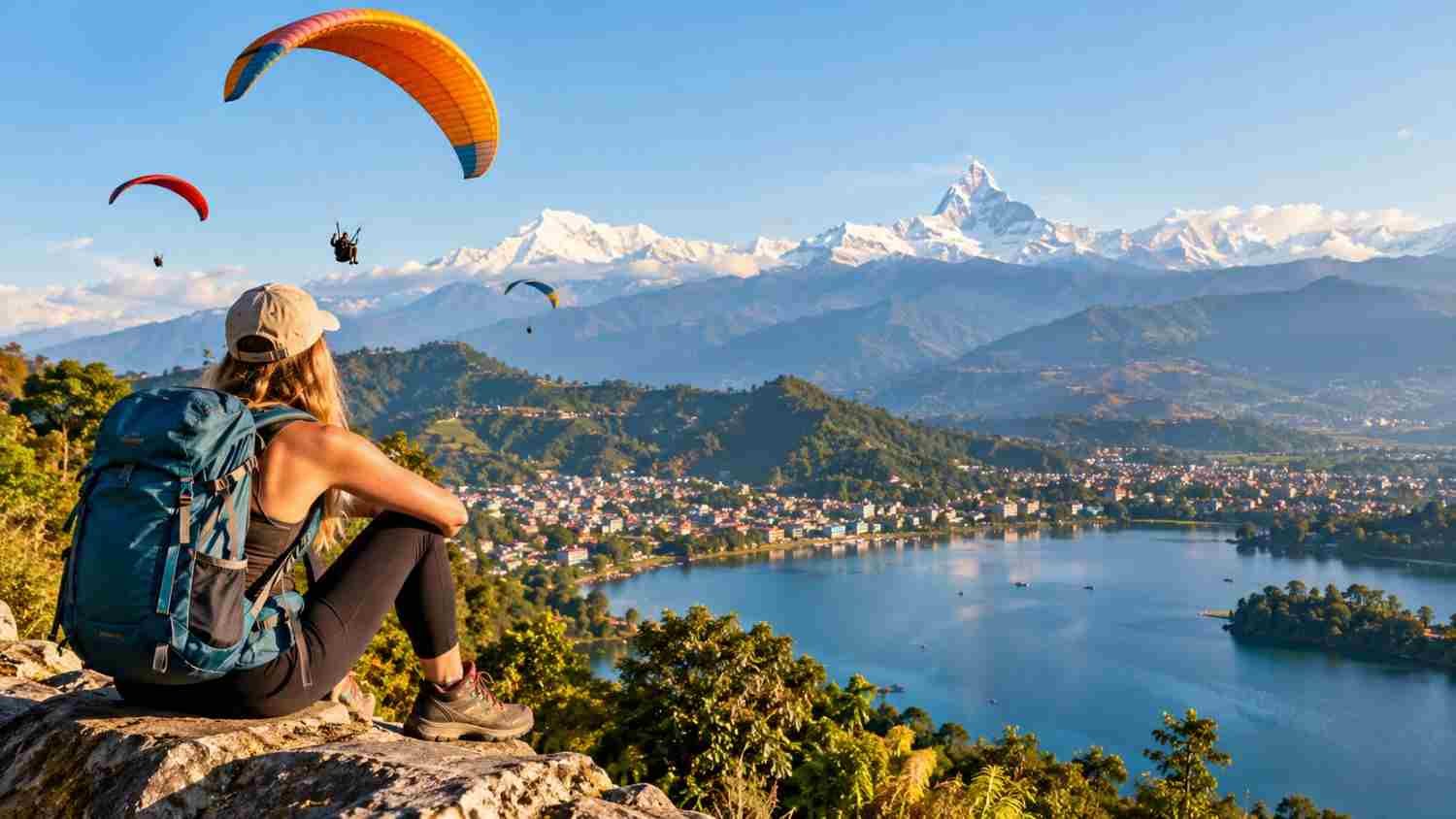
    Pokhara has an unusually useful setting. Phewa Lake sits below forested hills, Sarangkot rises above the valley, and the Annapurna region begins beyond the city. That geography puts aerial, water, and mountain activities within practical reach of Lakeside.

    For travelers with only a few days, that helps. Several experiences combine with sightseeing and evenings around the lake.

    Paragliding From Sarangkot

    Paragliding From Sarangkot

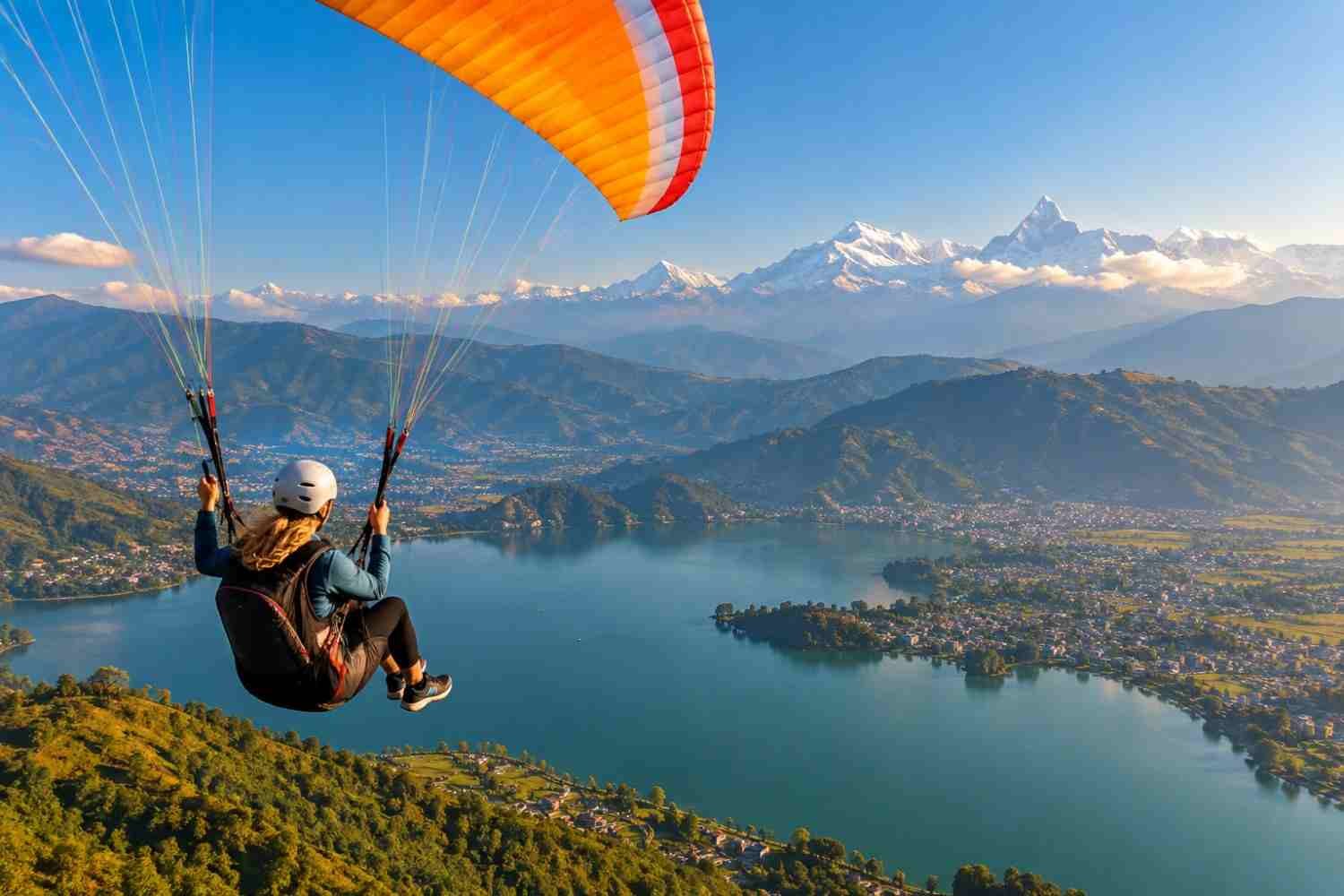
    Paragliding is probably the signature Pokhara adventure. Flights launch from Sarangkot at roughly 1,592 meters and descend toward the lake, with the Annapurna range forming a dramatic backdrop on clear days.

    A tandem flight usually lasts around 20 to 40 minutes, with extra time for transportation and preparation. It offers a strong balance of excitement and scenery, although flights remain weather dependent.

    Take the ZipFlyer for a Serious Rush

    The Sarangkot zipline is made for travelers who want speed rather than a leisurely view. The ride drops steeply across the valley, covering about 1.8 kilometers and reaching speeds close to 100 kilometers per hour under suitable conditions.

    The ride is short, but the steep descent makes it more intense than an ordinary zipline. Anyone uncomfortable with heights should consider that before booking.

    Go White-Water Rafting on the Upper Seti

    The Upper Seti offers a convenient introduction to white-water rafting because the river is close to Pokhara. A typical run can take around 1.5 hours, giving visitors genuine rapids without a multi-day expedition.

    The glacier-fed river moves quickly, and conditions change with the season. A guided trip is essential for visitors unfamiliar with river currents.

    Try Bungee Jumping at Hemja

    Hemja gives adrenaline seekers another way to get their heart racing. The tower bungee setup features a roughly 75-meter drop.

    This is less about scenery and more about overcoming the moment before the jump. Participants should follow weight limits, health requirements, equipment checks, and staff instructions carefully.

    Take an Ultralight Flight

    An ultralight flight offers a different kind of aerial adventure. Instead of the physical sensation of paragliding, it provides a broader perspective over Pokhara, Phewa Lake, and the surrounding mountains.

    This suits travelers who want altitude without launching from a hillside. Flights depend heavily on visibility and weather, so flexibility helps.

    Add a Trek or Mountain Bike Ride

    Adventure in Pokhara does not have to involve a single burst of adrenaline. Mountain biking covers rural roads and viewpoints, while hiking brings travelers closer to villages and landscapes.

    The Poon Hill Trek is a well-known option for travelers with enough time for a multi-day outing. Starting around Nayapul and passing through rhododendron country toward Ghorepani, the route reaches about 3,210 meters and is known for sunrise views across the Annapurna and Dhaulagiri ranges.

    For shorter plans, a local hill hike can deliver a taste of the landscape without several days away. It is a useful complement to broader searches such as things to do in Penang besides eating, where travelers may compare active experiences across Asian destinations.

    Choose a Water Adventure on Phewa Lake

    Choose a Water Adventure on Phewa Lake

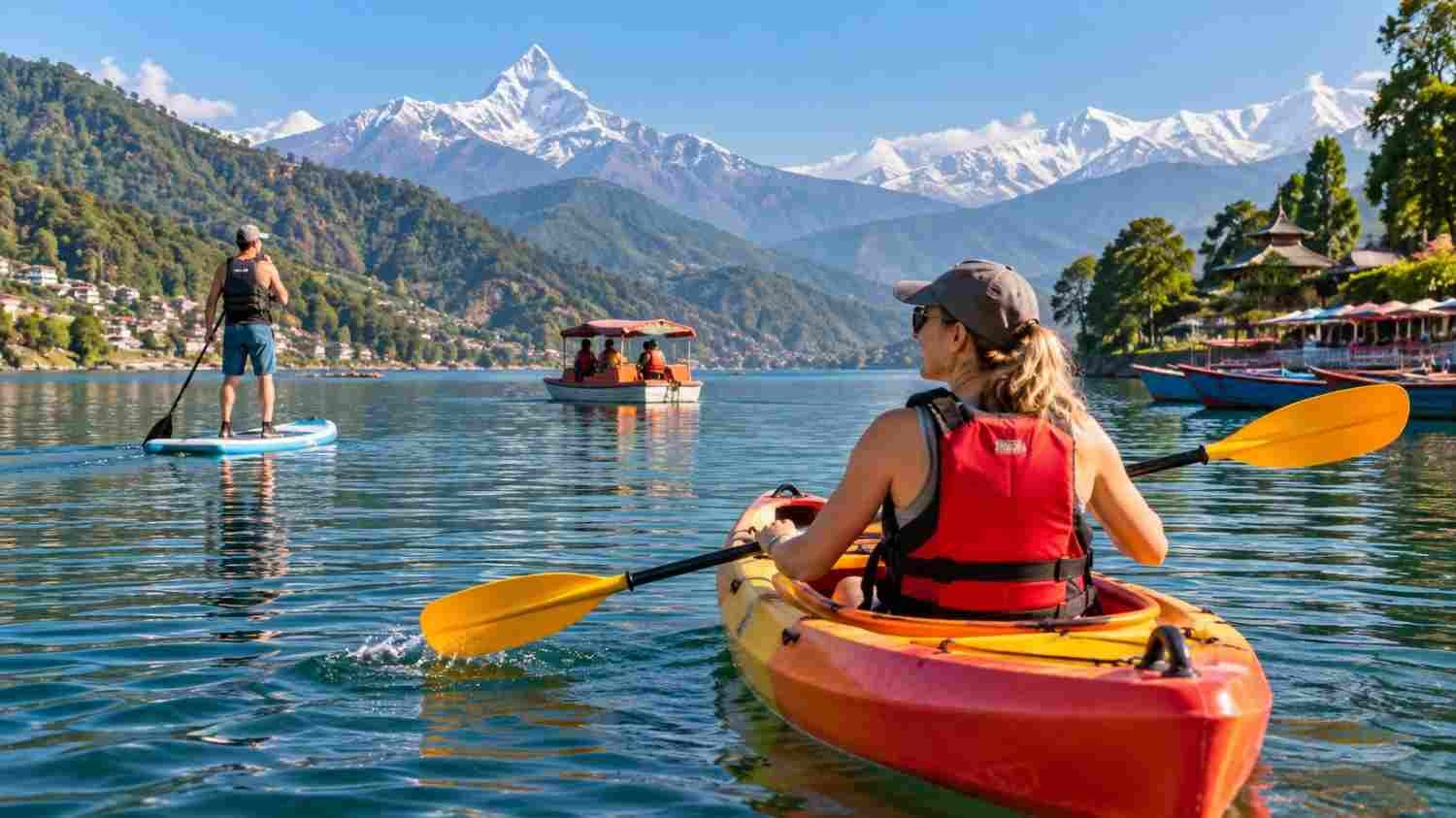
    Phewa Lake provides a gentler side of Pokhara’s outdoor scene. Kayaking, paddleboarding, and boating let travelers spend time on the water while looking toward the hills.

    These activities lack the rush of a zipline, but that is their appeal. They work well after a demanding adventure day and suit couples, families, and travelers who prefer activity without extreme heights.

    For travelers building a broader water-focused itinerary, the best water activities in El Nido, Palawan can provide a useful comparison for aquatic experiences.

    Picking the Right Adventure for Your Trip

    Choose based on your time, comfort level, and interests.

    • For maximum adrenaline, consider paragliding, ziplining, rafting, or bungee jumping.
    • For scenery, choose paragliding, an ultralight flight, hiking, or the Poon Hill Trek.
    • For a relaxed outdoor experience, try Phewa Lake kayaking or paddleboarding.
    • For a deeper physical challenge, choose trekking, mountain biking, or canyoning.

    Leave flexibility in the schedule. Weather can change quickly, and activities may be postponed.

    When to Plan Your Adventure

    Autumn and spring are generally attractive seasons because visibility and weather can be favorable. October and November are particularly appealing for mountain views after the monsoon.

    Monsoon months can bring heavier rain and cloud cover, affecting flights, trails, and river conditions. Winter can still work, but higher elevations may be cold. Confirm operating conditions shortly before heading out.

    A Few Practical Checks Before Booking

    Choose established operators, ask what equipment is included, and confirm transportation, duration, and weather policies before paying.

    Avoid packing every adventure into one day. A morning flight followed by rafting may sound efficient, but delays and fatigue can make a packed schedule stressful. Leave room for the unexpected.

    FAQs: Top Adventure Activities in Pokhara Nepal for Every Kind of Adventurer

    1. What is the most popular adventure activity in Pokhara?

    Paragliding from Sarangkot is one of Pokhara’s best-known experiences, combining a tandem flight with views of Phewa Lake and the Himalayan ranges.

    2. Is Pokhara good for first-time adventure travelers?

    Yes. The city offers guided activities at different intensity levels, from kayaking and scenic flights to rafting and trekking.

    3. How long should I stay for adventure activities?

    Three to five days gives most travelers enough time to combine several shorter experiences with a longer outdoor excursion.

    4. Can weather affect adventure activities?

    Yes. Wind, rain, cloud cover, and river conditions can affect flights, rafting, trekking, and other outdoor activities. Flexible plans help during wetter months.

    Why Pokhara Stays With Adventurous Travelers

    What makes Pokhara memorable is not simply the number of activities available. It is the way the landscape keeps changing around them. You can watch mountains from a quiet lakeshore, cross a river in the afternoon, and wake up the next morning above the valley. That variety keeps an adventure trip from feeling like a checklist.

    The strongest experiences fit your pace and appetite for excitement. In Pokhara, there is plenty of room to find that balance.

  • How to Manage Cash and Card Payments While Traveling in Asia

    How to Manage Cash and Card Payments While Traveling in Asia

    I plan travel money around the moments when paying becomes awkward: a small restaurant, a remote transfer, or a hotel deposit. Knowing how to manage cash and card payments while traveling in asia means preparing for those situations before departure. My approach is to carry local cash, suitable cards, and a backup that works without my phone. That combination leaves more room to enjoy the journey.

    Build Your Payment Plan Before Departure

    Check your debit and credit card terms for foreign transaction charges, overseas withdrawal fees, daily limits, and international access. A card advertised as having no foreign transaction fee may still charge for cash withdrawals.

    Carry two physical cards, preferably from different issuers, and store them separately. Confirm your numeric PIN and check whether your bank requires a travel notice. Save its international support number somewhere accessible without logging into your banking app.

    Give Each Payment Method a Job

    Use a suitable debit card for withdrawals and a credit card for purchases where accepted. Check hotel deposit policies because holds can temporarily reduce available funds. Credit card cash withdrawals may attract cash advance fees and immediate interest, making them an expensive routine choice.

    Adjust Your Setup for Each Destination

    Adjust Your Setup for Each Destination

    Asia has no universal payment pattern. Singapore offers widespread card and contactless options, while smaller businesses elsewhere may depend on cash or domestic payment systems.

    In Japan, overseas cards work at many businesses, but cash remains a useful alternative when terminals fail or merchants do not accept cards. Japan Post Bank and Seven Bank provide options for withdrawing cash with supported international cards.

    In China, visitors can link supported international cards to Alipay and WeChat Pay. Registration, identity verification, card compatibility, and transaction restrictions still deserve attention before relying on either app.

    For Thailand, Vietnam, Indonesia, and other destinations, check your actual route. A city hotel, island guesthouse, and roadside food stall can require different payment methods.

    Estimate Cash From Upcoming Expenses

    Avoid choosing a fixed cash percentage for every trip. Estimate the expenses you expect to pay in cash before your next reliable withdrawal opportunity.

    Include meals, local transport, market purchases, admission charges, and accommodation balances. If those costs total the equivalent of $30 daily and you expect three days without dependable ATM access, around $90 plus a modest emergency reserve provides a starting estimate.

    Keep daily spending money separate from emergency cash. Obtain small denominations when possible; a vendor may struggle to change a large note for a snack.

    Compare Exchange Options Carefully

    As you budget for your trip and choose travel eSIM for multiple Asian countries, compare how much local currency you receive after every fee, rather than judging an exchange counter by its advertised rate alone. Use licensed providers and count your notes before leaving.

    If arrival transport requires cash, arrange enough for that immediate expense. Convenience can justify a small arrival exchange even when another location offers better value.

    Avoid ATM and Conversion Surprises

    Avoid ATM and Conversion Surprises

    Withdrawal costs can include your bank’s fee, the ATM operator’s charge, and currency conversion costs. Check the screen before confirming, and cancel if the charges are unclear.

    Fewer withdrawals can reduce repeated fixed fees, but balance those savings against carrying too much cash. Prefer machines at staffed bank branches when practical. Inspect the machine, shield your PIN, and decline unsolicited help.

    At payment terminals and ATMs, distinguish the withdrawal or purchase from optional currency conversion. Choosing local currency avoids the provider’s dynamic currency conversion markup, although your own issuer may still charge fees.

    Check QR Access Before Depending on It

    A merchant displaying a QR code does not automatically accept your existing wallet. Domestic systems may require a compatible app, supported account, phone number, or identity check.

    When planning to manage cash and card payments while traveling in Asia, check visitor eligibility, funding methods, transaction limits, and whether unused wallet balances can be refunded. Install and verify supported apps early, then test a small payment before loading substantial funds.

    A card stored in a mobile wallet also does not guarantee access to local QR networks. Keep physical cards and cash available.

    Prepare for Failed Payments and Border Days

    Prepare for Failed Payments and Border Days

    Keep your phone charged and arrange reliable connectivity for banking authentication and payment apps. Check how you will receive verification messages abroad. Save essential contact details offline.

    If a card fails, confirm the accepted payment method and try your backup. Check bank alerts before repeatedly retrying. For a pending transaction, establish whether payment succeeded before paying again.

    Before crossing a border, estimate remaining expenses in the old currency and arrival expenses in the next. Avoid unnecessary last-minute withdrawals. Track spending by country, including fees, and check customs cash-declaration rules for your route.

    Frequently Asked Questions

    1. How can I manage cash and card payments while traveling in asia safely?

    Carry local cash and two cards stored separately. Check fees, retain emergency funds, and prepare another way to pay if your phone becomes unavailable.

    2. Can I rely entirely on cards?

    Acceptance varies by destination and merchant. Keep cash for businesses that cannot process your card, especially during remote travel.

    3. Should I load a large mobile wallet balance?

    Check refund rules first. Start small until you understand acceptance, charges, and account limits.

    My Final Take

    I would rather spend a few minutes checking payment access before departure than resolve it while transport is waiting. A flexible setup helps me control fees, handle everyday purchases, and recover when something fails. The right mix follows the itinerary.